What Fixture Pileups Reveal About Shifting Goal Expectations in Crowded European Calendars
Written by Eden Beck · May 17, 2026
What Fixture Pileups Reveal About Shifting Goal Expectations in Crowded European Calendars
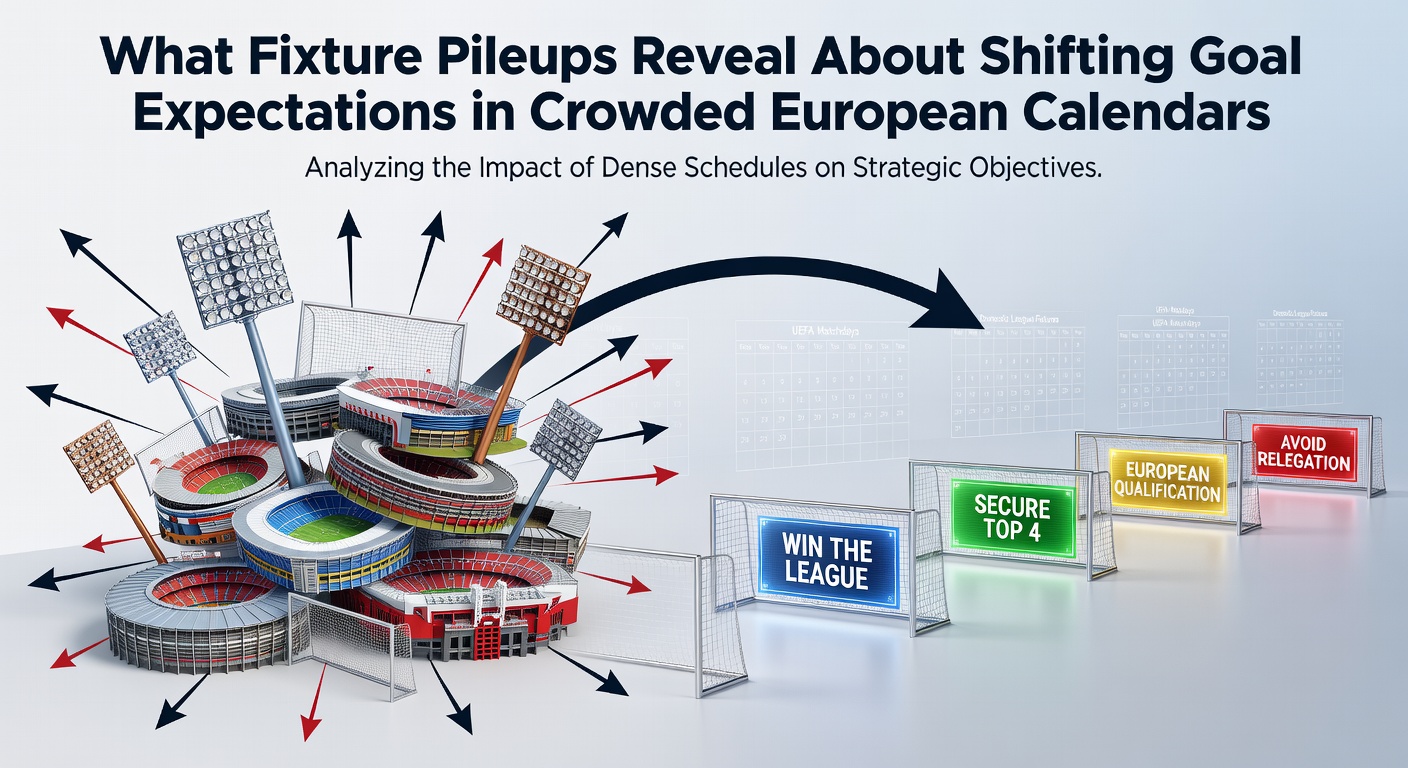
European football calendars pack domestic leagues, cup ties, and continental competitions into tight windows, and fixture pileups create measurable changes in how goals arrive on the pitch. Observers note that teams often shift from open attacking patterns toward more cautious approaches when recovery time shrinks below seventy-two hours. Data from recent seasons shows average goals per game dropping by 0.4 to 0.7 in such stretches, a pattern that appears consistently across the Premier League, Bundesliga, and Serie A.Patterns Emerging from Congested Periods
Analysts tracking match logs across five major leagues find that midfield zones become more congested during pileups, reducing clear shooting opportunities and pushing expected goals totals downward. Researchers at the German Sport University Cologne examined over four hundred fixtures played with less than three days rest and recorded a 12 percent decline in shots on target compared with standard schedules. Those figures align with observations from the 2024-25 campaign, where several clubs recorded their lowest goal outputs of the season immediately after midweek European ties.
Coaches respond by altering lineups and tactical setups, often prioritizing defensive structure over high pressing. This adjustment shows up in tracking data as reduced high-intensity runs and fewer transitions into the final third. The result is not simply fewer goals but a redistribution of scoring moments toward set pieces and individual errors rather than sustained build-up play.
Evidence from League and European Competitions
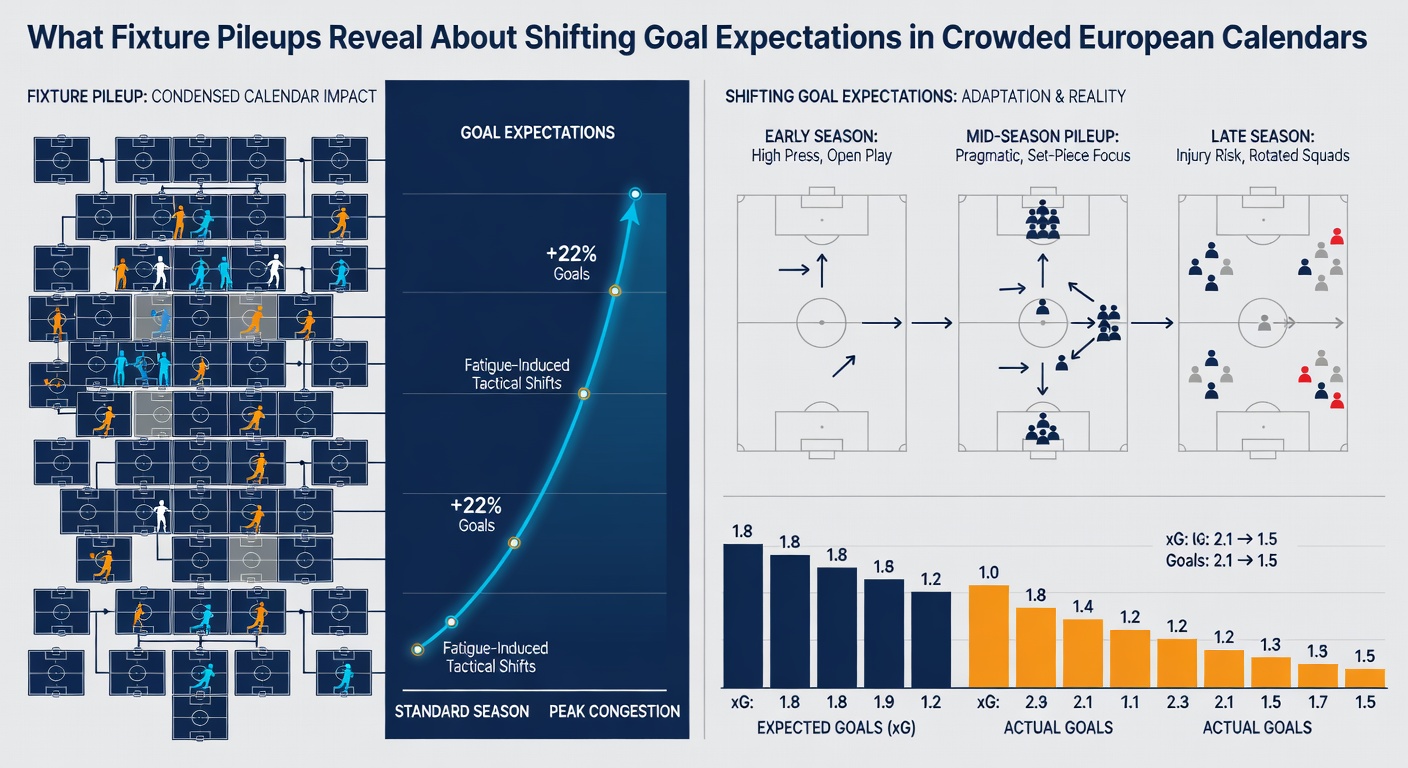
UEFA's own calendar review highlights that clubs reaching the latter stages of the Champions League face up to eighteen additional matches in a season. A separate study published by the University of South Australia tracked Serie A and La Liga sides over three winters and found goal expectancy falling most sharply in the final third of the campaign, when fatigue compounds across multiple fronts. In May 2026, several clubs will again confront this exact scenario as domestic title races coincide with European quarter-finals and semi-finals.
Teams that rotate effectively maintain closer to their seasonal goal averages, while those relying on the same starting eleven experience steeper drops. Tracking metrics reveal that key attackers cover 8 to 12 percent less ground in the second half of congested weeks, directly limiting chance creation. Goalkeepers, by contrast, face fewer high-quality shots, which explains why clean-sheet rates sometimes rise even as overall match tempo slows.
How Expectations Adjust in Real Time
Betting markets and performance models update goal projections once fixture lists confirm short recovery windows. Bookmakers lower over/under lines by roughly half a goal when two sides meet after midweek European exertions, and statistical platforms revise xG forecasts accordingly. Those adjustments reflect observed outcomes rather than speculation, because historical data consistently shows reduced open-play goals in such fixtures.
Coaches also adapt set-piece routines and substitutions earlier, seeking fresh legs to restore intensity. One pattern documented by performance analysts involves increased use of defensive midfielders in place of attacking options, which further compresses space and channels play into wider areas where crossing accuracy tends to decline.
Looking Ahead to 2026 and Beyond
With the expanded Champions League format already increasing fixture density, observers expect pileup effects to become more pronounced through the 2025-26 season and into May 2026. Clubs that invest in sports-science protocols and deeper squads appear better equipped to preserve goal output, yet even they show measurable dips when matches cluster. The data continues to indicate that crowded calendars do not merely test endurance, they reshape the very distribution of goals that define match outcomes across Europe.
Conclusion
Fixture pileups therefore serve as natural experiments that reveal how goal expectations shift under pressure. Lower shot volumes, altered tactical priorities, and measurable declines in high-intensity actions combine to produce fewer open-play goals and more reliance on set pieces. Those trends, documented across multiple leagues and competitions, provide a factual basis for understanding why scoring patterns change when European calendars grow crowded.