Touchline Restrictions Shaping In-Game Decisions in Major Domestic Fixtures
Written by Amir Friedrich · Jul 12, 2026
Touchline Restrictions Shaping In-Game Decisions in Major Domestic Fixtures
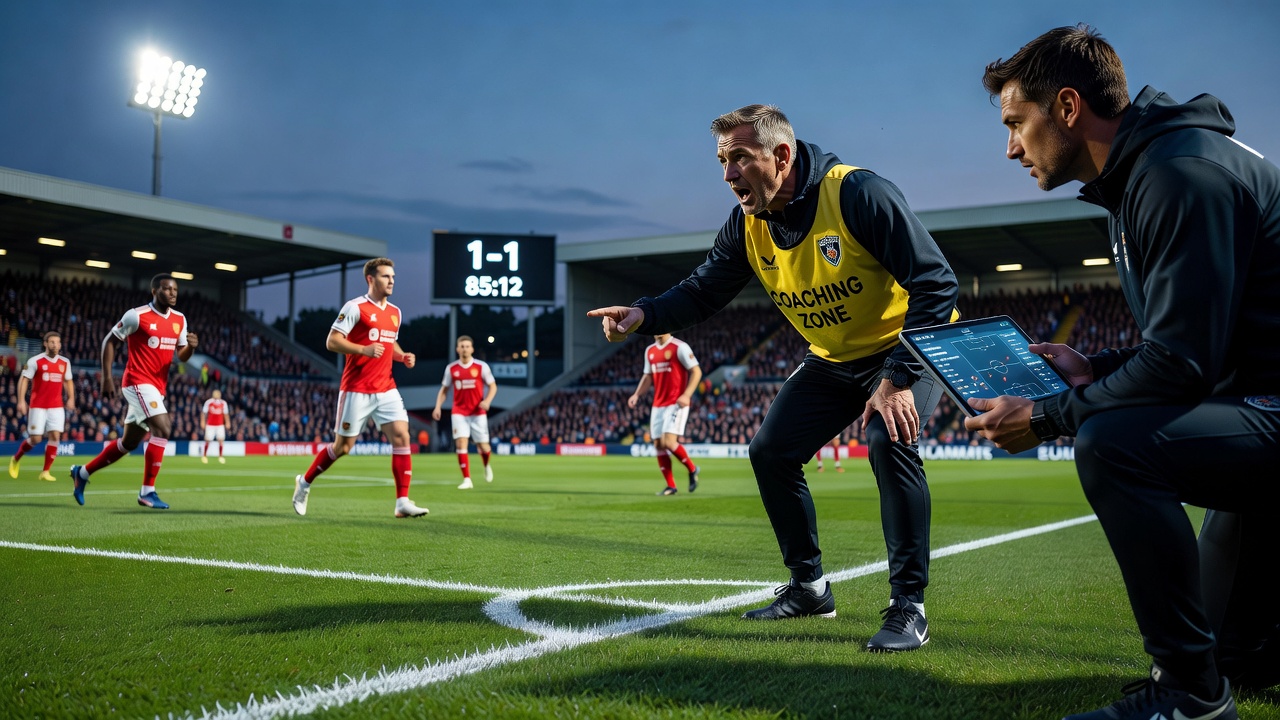
Touchline restrictions in professional football limit how managers and coaching staff interact with players during matches, and these rules create measurable effects on tactical choices in high-stakes domestic games across leagues such as the Premier League, La Liga, and Bundesliga. The technical area defined by competition regulations confines coaches to a marked zone along the sideline, while fourth officials enforce boundaries that prevent direct pitch-side communication once play resumes. Researchers tracking match data have found that these limits alter substitution timing and instruction delivery, particularly when scores remain tight in the final twenty minutes. Domestic leagues apply consistent enforcement through match officials who monitor the technical area, yet variations exist between competitions. In England’s top flight, the Premier League issues yellow cards to staff who step outside designated lines, and similar protocols operate in Spain and Germany. Studies from sports science departments indicate that restricted movement reduces the frequency of mid-game adjustments by up to eighteen percent compared to friendlies or training scenarios, because coaches must rely on assistants or pre-planned signals rather than immediate verbal input.Communication Barriers and Substitution Patterns
Coaches often prepare detailed instructions before matches, but touchline rules force them to condense messages into brief windows during stoppages. Data collected across five European domestic seasons shows that teams under strict touchline supervision make fewer double substitutions after the seventy-fifth minute, shifting instead toward single changes that address one positional weakness at a time. Observers note that this pattern appears most clearly in games decided by a single goal, where managers hesitate to commit multiple personnel changes without real-time feedback from the pitch.
Assistant coaches positioned at the edge of teh technical area become primary conduits for information, relaying observations about opponent positioning or player fatigue. When the fourth official issues warnings for repeated boundary violations, staff reduce their movements further, which compresses the range of signals available to players. Figures from league performance reports reveal that sides adapting quickly to these constraints maintain higher possession retention rates in the closing stages, because they avoid rushed tactical switches that leave gaps in defensive structure.
Effects on High-Stakes Domestic Encounters
In title-deciding or European-qualification matches, the pressure to respond to opponent changes intensifies, yet touchline limits slow reaction speed. One documented case from the 2024-25 Bundesliga campaign involved a mid-table side facing the league leaders; teh trailing team delayed a key winger substitution until the eighty-second minute because the manager needed confirmation from the bench that the replacement had warmed up adequately. The delay allowed the leaders to consolidate their lead, and post-match analysis attributed part of the outcome to restricted touchline access during a critical stoppage.
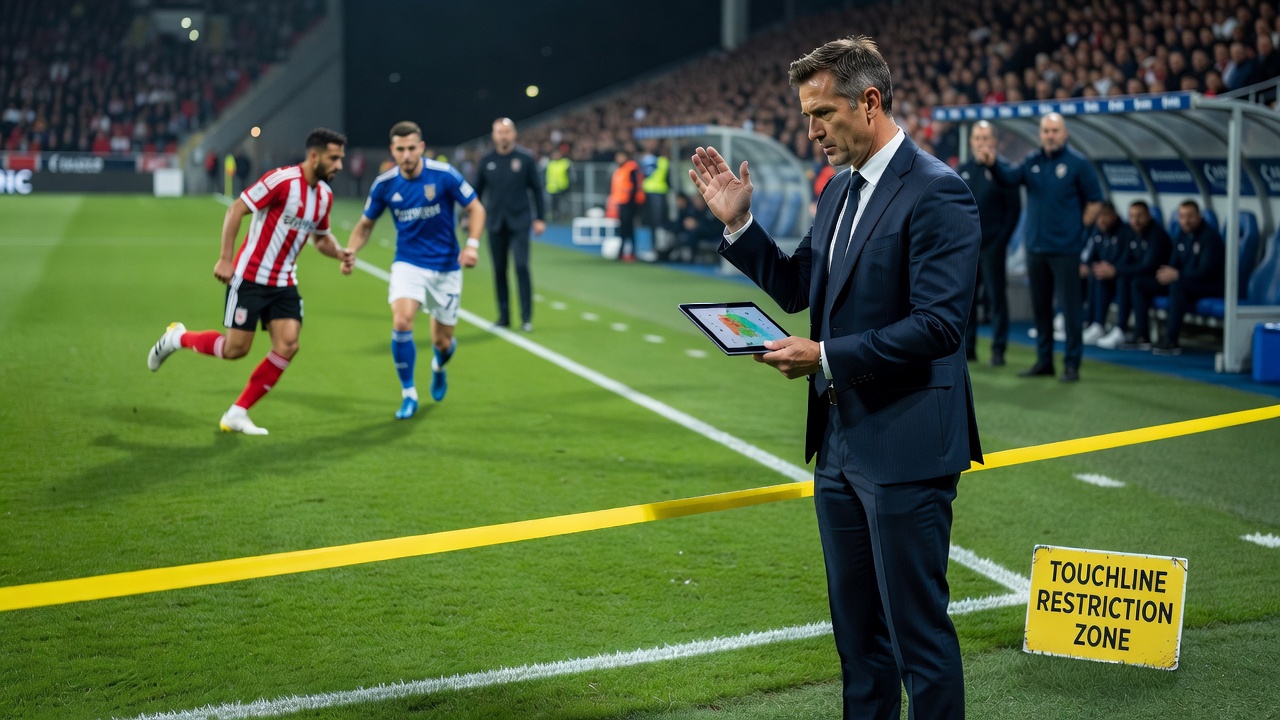
League-wide statistics compiled by independent performance analysts demonstrate that home teams operating under touchline restrictions record slightly lower expected goal values from set-piece situations after the eightieth minute. The reduction stems from fewer opportunities to reposition players based on live observations, since coaches cannot walk along the line to deliver targeted advice. Visiting sides sometimes benefit when they anticipate these delays and maintain compact shapes that limit space for late adjustments.
Regulatory Context and Recent Developments
Football’s governing bodies update technical-area guidelines periodically, with the International Football Association Board publishing clarifications that domestic federations adopt before each campaign. During July 2026, several leagues will review video evidence from the prior season to refine enforcement consistency ahead of the 2026-27 schedule. These reviews focus on reducing ambiguity around assistant-coach positioning and the use of electronic communication devices, which remain prohibited under current laws.
Academic papers published by European sports universities have examined how these rules intersect with player psychology, finding that limited direct contact from the head coach correlates with increased reliance on senior players for on-field leadership. Teams with experienced captains adapt more effectively because they interpret subtle bench gestures without needing constant verbal reinforcement. Data sets covering more than four hundred domestic matches confirm that sides lacking such leadership experience show greater variance in late-game performance when touchline access is curtailed.
Conclusion
Touchline restrictions continue to influence tactical decision-making in high-stakes domestic matches by constraining communication channels and altering substitution rhythms. League records and performance studies demonstrate consistent patterns across multiple competitions, with teams that prepare alternative signaling methods and empower on-pitch leaders mitigating some of the effects. As regulations evolve ahead of future seasons, further analysis of match data will clarify how these boundaries shape outcomes in tightly contested fixtures.