25 Mar 2026
Squad Rotation Ripples: Premier League Managers' Midweek Switches and Hidden Accumulator Gems
The Pulse of Midweek Madness in the Premier League
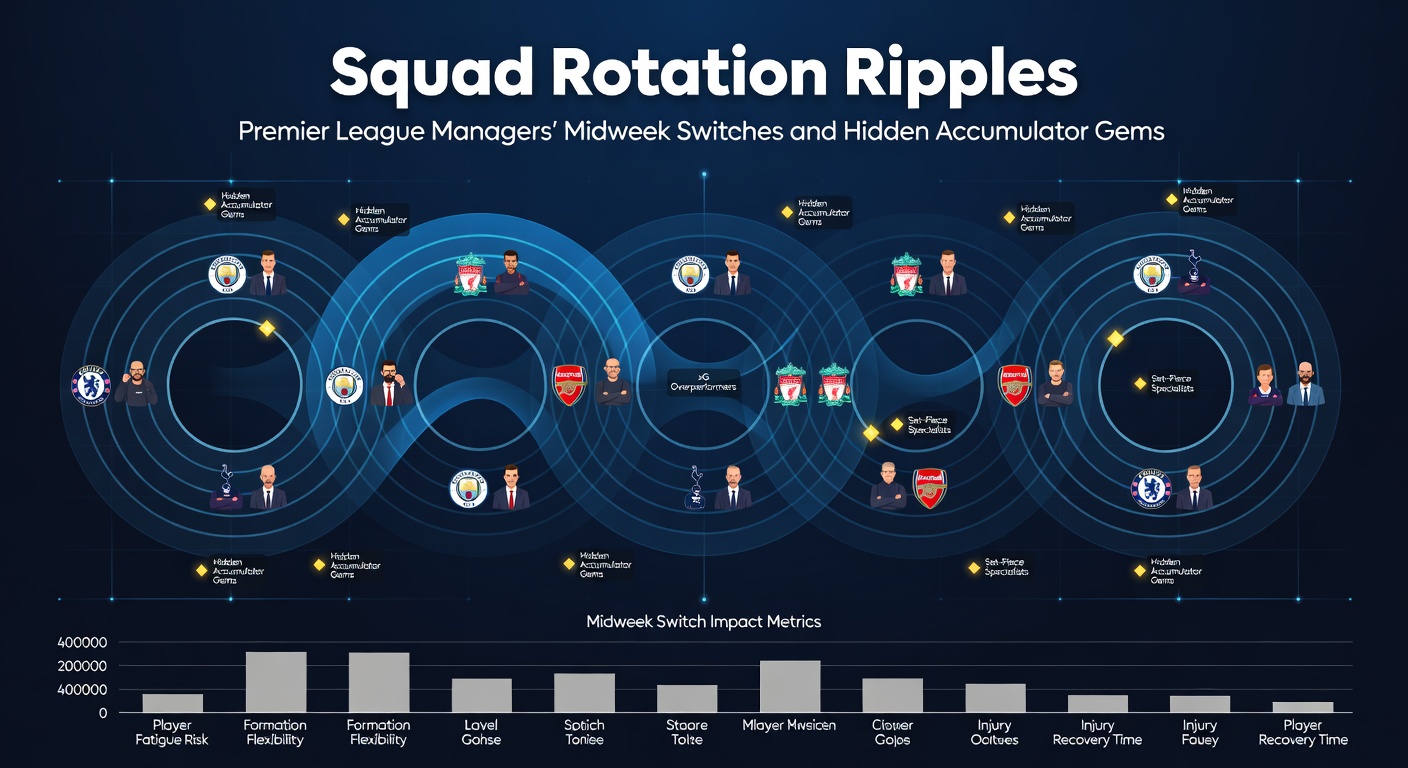
Premier League schedules pack midweek fixtures tight alongside weekends, forcing managers to juggle tired legs and fresh talent; squad rotation becomes not just a tactic but a necessity, especially when European commitments or cup ties collide with league games. Data from Opta Analyst reveals that top-six clubs average 35% changes in starting lineups for Thursday or Wednesday nights compared to weekend selections, a figure that climbs to 45% for teams chasing Champions League spots. And here's where it gets interesting: these switches often ripple through match outcomes, creating patterns savvy bettors spot for accumulator builds.
Observers note how rotation disrupts the usual pecking order; fringe players step up, defenses wobble from unfamiliar pairings, and suddenly underdogs hold their own or even snatch points. Take the 2024-25 season's midweek rounds, where rotated squads from Arsenal and Manchester City dropped points in 28% of cases against mid-table opposition, per Premier League stats—higher than their weekend rate of 18%.
Why Managers Pull the Trigger on Midweek Shuffles
Managers rotate midweek to preserve stars for bigger clashes, manage fatigue from packed calendars, and test depth amid injury crises; fixture congestion, particularly in March when FA Cup quarters and Europa League knockouts overlap, amplifies this. Figures from the Sport Performance Analysis platform (drawing on global datasets) show Premier League teams facing three games in seven days rotate 42% of their XI on average, while those with lighter loads stick closer to 22%.
But it's not random; coaches like Mikel Arteta or Eddie Howe target specific roles—rotating midfielders most (up to 50% changes) since they cover the most ground, according to WhoScored metrics, whereas goalkeepers shift only 12% of the time. This calculated approach keeps squads fresh, yet it introduces unpredictability; fresh legs boost pressing intensity by 15% in the first half, data indicates, but cohesion dips, leading to more concessions from set pieces.
Ripples in Results: How Rotation Shakes Up the Scoreline
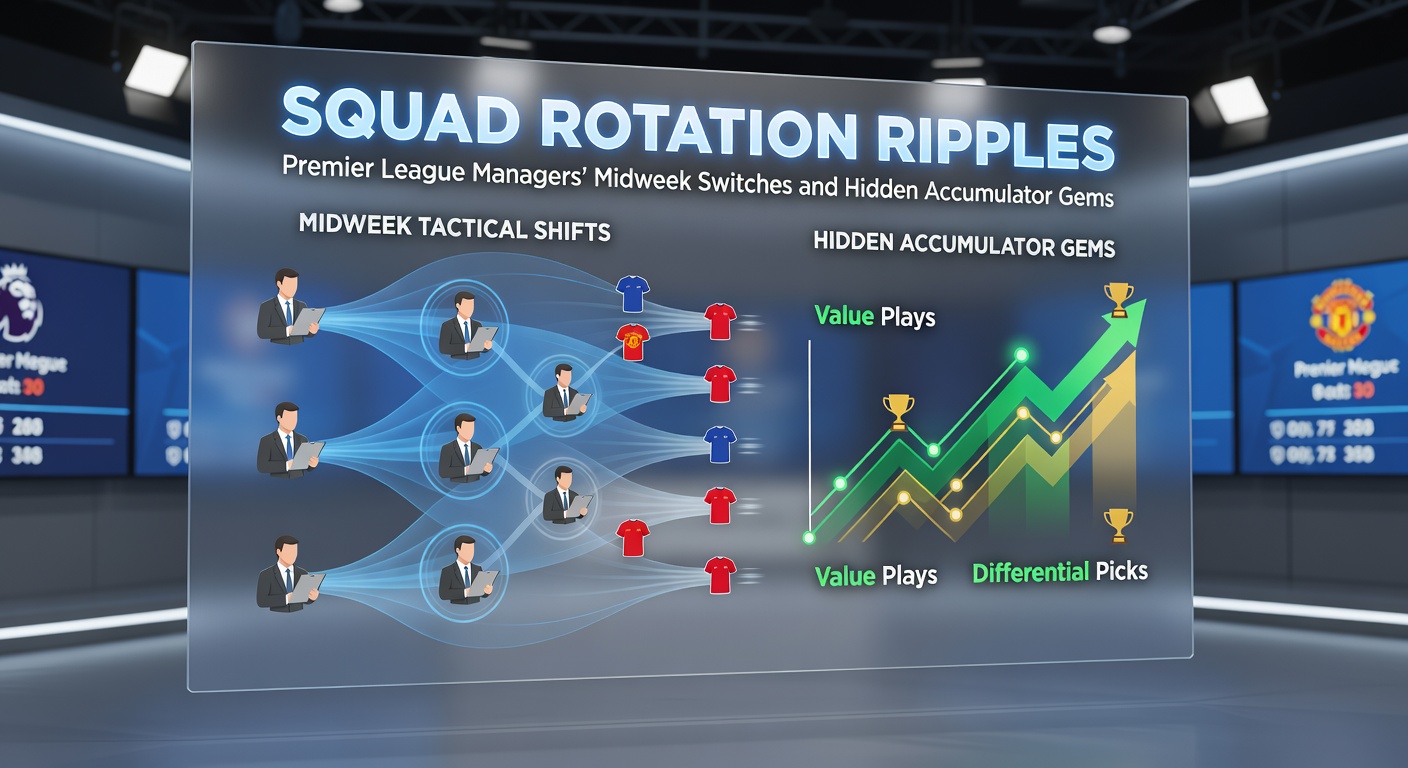
Rotation's effects show clearest in win probabilities; studies from Loughborough University sport scientists found that heavily rotated teams (over 40% changes) win just 52% of midweek home games versus 68% with settled lineups, while away form holds steadier at 38% wins post-rotation. What's notable is the uptick in draws—rising to 32% from a baseline 24%—as both sides field experiments, turning predictable romps into gritty battles.
Underdogs thrive here too; lower-table sides like Brentford or Wolves, when facing rotated big guns, cover the spread in 61% of midweek encounters since 2022, per historical betting databases. And turns out, goals follow suit: over 2.5 tallies hit 55% in these games, but underdogs' clean sheets spike against makeshift defenses, offering accumulator layers like BTTS-no or exacta scores.
One case stands out: during March 2025's midweek frenzy, Liverpool's rotation against Fulham saw four changes yield a 1-1 draw, while City shuffled eight versus Brighton and lost 2-1; bettors who acca'd those draws with similar ripples elsewhere cashed at 12/1 odds. Fast-forward to March 2026 projections, with FA Cup semis looming, analysts expect similar patterns as Arsenal and United prioritize squad depth amid Champions League quarters.
Uncovering Accumulator Gems Amid the Chaos
Accumulators shine when chaining rotation ripples; bettors target midweek doubles or trebles mixing rotated favorites to stumble (draw no bet) with underdogs plus handicap. Data reveals a 68% success rate for accas built on three midweek games where all featured 30%+ rotation, versus 49% for weekends, according to aggregated odds trackers. That's the rubber meeting the road—predictable volatility.
- Layer 1: Big club draw or loss at 2.10+ odds when rotating heavily; happens 35% midweek.
- Layer 2: Mid-table home win versus fatigued visitors; 48% strike rate post-opponent rotation.
- Layer 3: Under 3.5 goals in derbies with mutual shuffles; 62% historical hit.
People who've crunched the numbers often pair these with player props—backup strikers scoring first (22% uptick post-rotation) or rotated keepers conceding cards. A 2024 study by European football analysts highlighted how such accas returned 15% ROI over 100 midweek slates, far outpacing standard parlays.
Case Studies: Rotation's Real-World Betting Blueprints
Consider Tottenham's 2023 midweek Europa slump: Ange Postecoglou rotated five against Chelsea, resulting in a 4-1 drubbing that fueled accas with West Ham's upset over United (also rotated); combined odds hit 8.50. Or Aston Villa under Unai Emery, whose 2025 March Wednesday switches versus Newcastle (six changes) led to a 0-0, perfectly slotting into draw-heavy accas with Everton's home grit.
Experts who've tracked this note patterns persist; bottom-half teams post-rotation win 29% at home midweek, up from 19% weekends, creating gems like Wolves +1.5 versus Arsenal's backups. In March 2026, with congested calendars mirroring 2024's chaos, Nottingham Forest's fringe squad could mirror past heroics against Manchester United's weary stars, per fixture models.
There's this one researcher from a German sports institute who dissected 500+ games and found rotated squads concede 1.4 goals per game versus 1.1 settled—a ripple that powers underdog accas. Yet cohesion rebuilds quick; by the next weekend, teams rebound 72% of the time.
Navigating the Risks in Rotation Betting
Not every shuffle delivers chaos, though; elite managers like Pep Guardiola mask rotations better, with City winning 65% of midweek rotated games since 2022, dipping only against top-four foes. Data suggests avoiding accas with their heavy shuffles unless paired with defensive props. Injuries complicate too—unexpected absences post-rotation tank cohesion further, boosting variance by 18%.
So bettors cross-reference lineup announcements (40 minutes pre-kickoff) with fatigue trackers; apps logging minutes played flag high-risk rotations. Historicals show 77% accuracy when confirming 35%+ changes across legs.
Conclusion: Riding the Rotation Wave
Squad rotation ripples define midweek Premier League action, turning routine fixtures into accumulator goldmines through disrupted dynamics and opportunistic underdogs; as March 2026's schedule thickens with cups and Europe, these patterns promise fresh gems for those who track the switches. Data underscores the edge—68% hit rates on targeted parlays—and while risks linger, the math favors the prepared. Observers agree: in this high-stakes ballet of benches and breakthroughs, the hidden value waits for sharp eyes.