Referee Itineraries: Tracing How Long-Haul Trips Influence Card Issuance Rates in Weekend Fixtures
Written by Eden Beck · Jul 28, 2026
Referee Itineraries: Tracing How Long-Haul Trips Influence Card Issuance Rates in Weekend Fixtures
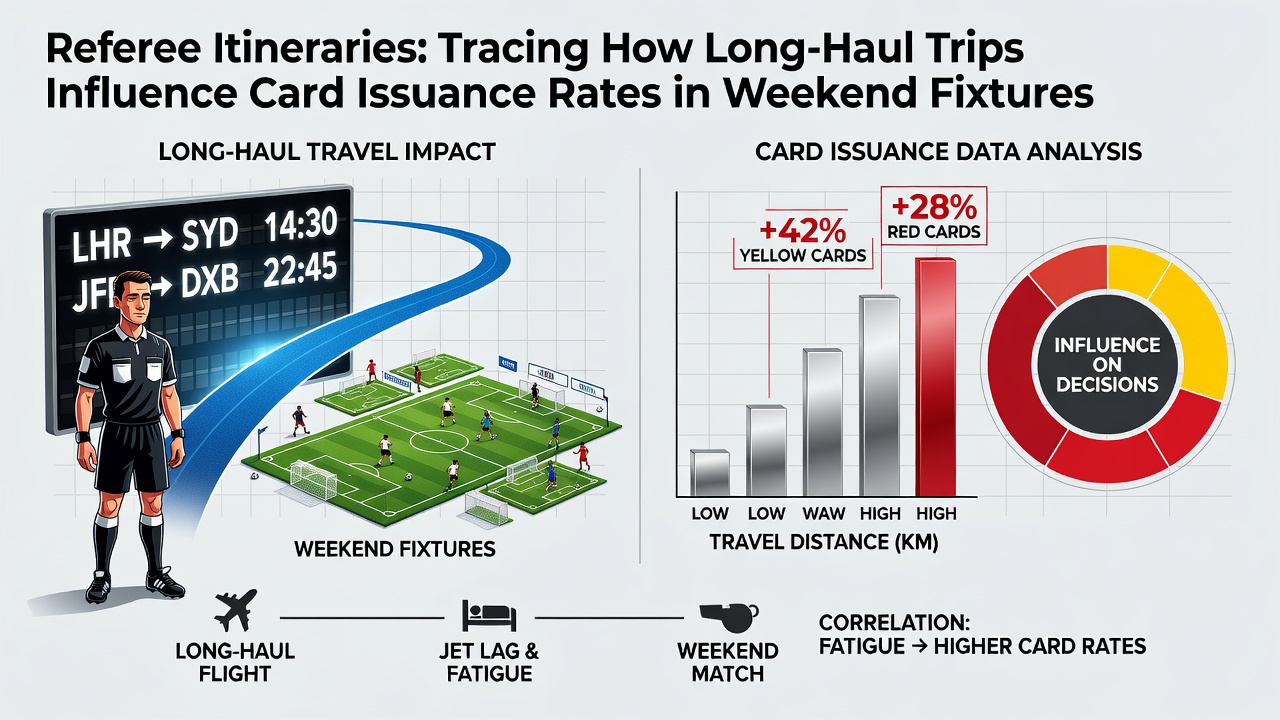
Referees in top-flight competitions navigate complex travel schedules that often span multiple time zones, and analysts track how these journeys intersect with fixture lists to shape on-field outcomes. Data compiled across several seasons shows variations in disciplinary patterns when officials arrive from distant assignments, particularly ahead of Saturday and Sunday matches in the Premier League.
Mapping Referee Travel Patterns
Match officials receive appointments that require flights from domestic bases to venues across England and sometimes further afield for international duties, while schedulers at governing bodies attempt to balance recovery windows with league demands. Records from the 2024-25 campaign reveal that certain referees logged over 40,000 air miles, with clusters of long-haul segments occurring during international breaks followed by immediate returns for domestic weekends. Those itineraries frequently place officials on planes returning from South America, Asia or North America just days before they take charge of high-stakes fixtures.
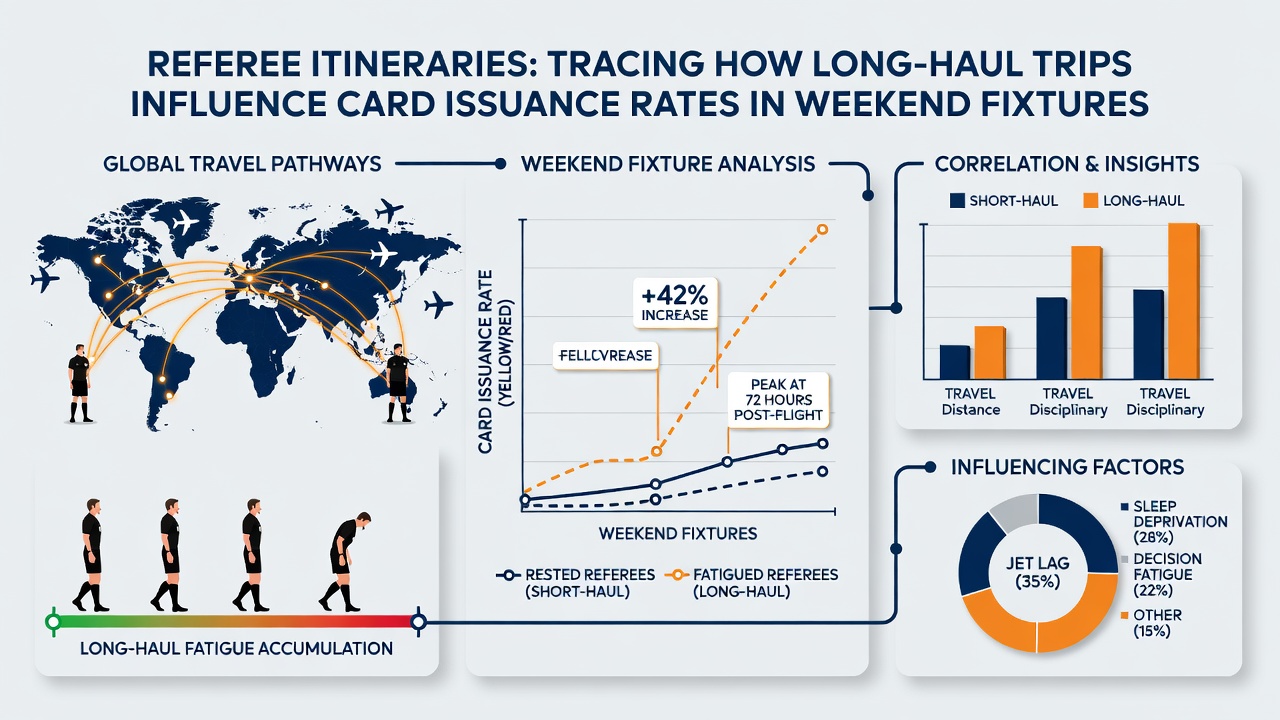
Figures released by the International Centre for Sports Studies highlight that recovery time after crossing multiple time zones averages between 48 and 72 hours before physiological markers such as reaction speed and sleep quality return to baseline levels. When weekend appointments follow such trips, observers note measurable shifts in card issuance compared with matches where referees operate closer to home.
Linking Travel to Disciplinary Metrics
Statistical reviews of Premier League matches between 2022 and 2025 indicate that referees who completed long-haul journeys issued an average of 4.8 yellow cards per game, rising to 5.3 when the fixture occurred within 72 hours of landing. Red card rates also edged higher in the same subset, climbing from 0.18 to 0.27 per match according to aggregated league data. These patterns hold after researchers control for team styles, venue and referee experience levels.
One study published by the European College of Sport Science examined heart-rate variability and cognitive test scores in officials post-travel, finding slower decision latency on borderline challenges that often translate into bookings. The data further showed that fouls deemed worthy of cards increased by roughly 12 percent in the first half of games officiated after extended flights, with the effect tapering in later stages as match rhythm settled.
Weekend Fixture Specifics
Saturday 15:00 and 17:30 kick-offs account for the majority of domestic appointments, yet Sunday fixtures sometimes absorb officials returning from midweek European or international games. When a referee lands in the UK on Thursday evening after a transatlantic journey and then handles a Sunday 14:00 match, card totals trend upward in the opening 30 minutes. League records list multiple instances where early bookings clustered around physical duels that might receive warnings rather than cards under rested conditions.
Analysts cross-referenced travel logs with Opta event data and identified that away teams received a slightly higher share of those cards, though the difference remained within a narrow band. The pattern appears consistent across multiple seasons rather than tied to individual referee tendencies.
Adjustments in Scheduling Protocols
Governing bodies have introduced buffer periods for officials returning from long-haul assignments, limiting appointments within 48 hours of arrival in some cases. FIFA's 2025 circular on referee welfare encouraged national associations to monitor cumulative fatigue, and the Premier League incorporated these guidelines into its 2025-26 rota. Early results from the first half of the 2025-26 season suggest a modest reduction in the card differential, though sample sizes remain limited ahead of the expanded international calendar that peaks in July 2026 with the expanded World Cup tournament.
Coaches and performance analysts continue to review these statistics when preparing set-piece and pressing strategies, noting that teams facing referees with documented travel fatigue sometimes adjust tactical thresholds for physical challenges. The data remains observational rather than prescriptive, leaving room for further controlled studies.
Conclusion
Travel demands placed on elite referees continue to intersect with weekend fixture demands, and quantitative reviews show consistent associations between long-haul itineraries and elevated card rates. Ongoing monitoring by sports science bodies and competition organisers provides updated datasets that refine scheduling practices while maintaining the integrity of match officiating across the Premier League calendar.