1 Apr 2026
Quarter-Goal Precision: Premier League Asian Handicap Tactics That Stack Accumulator Wins

Decoding Asian Handicaps: The Edge in Quarter-Goal Lines
Asian handicaps reshape football betting by leveling uneven matchups, and quarter-goal variants like -0.25 or +0.25 add a layer of precision that bettors exploit in Premier League accumulators; these lines split stakes across whole-goal and half-goal outcomes, so a -0.25 bet on a favorite wins fully if they triumph by two or more goals, half-wins on a one-goal victory, but loses entirely on a draw or defeat. Data from the European Gaming and Betting Association shows such markets grew 15% in popularity across European leagues last season, with Premier League games leading the charge because tight scorelines dominate—think 1-0 or 2-1 results that turn full handicaps into push scenarios, yet quarter lines deliver partial payouts. Experts note how this mechanic stacks accumulator wins, as even narrow home victories, common in England's top flight where 42% of matches end with a one-goal margin according to Opta stats, keep chains alive without voiding everything.
But here's the thing: quarter-goal precision shines brightest against mid-table clashes, where favorites rarely blow out opponents; researchers at the University of Sydney's gambling studies program analyzed 2024/25 Premier League data and found +0.25 underdogs cashed half-stakes in 28% of instances, boosting long-shot accumulators when paired with safer picks. Teams like Brighton or Wolves often grind out draws or slim losses at home, making +0.25 a reliable anchor—observers who've tracked this see accumulators of four to six legs hit 22% more frequently than straight win bets.
Premier League Patterns That Fuel Quarter-Goal Success
Premier League fixtures reveal clear trends for quarter-goal tactics, especially in April when fatigue hits and defenses tighten; as the 2025/26 season nears its climax in April 2026, clubs like Manchester United battle for top-four spots while relegation scrappers dig in, leading to low-scoring affairs ripe for -0.25 home picks—take Aston Villa's run last April, where they covered -0.25 in five straight home games against similar opposition, per historical Soccerway records. Figures indicate home teams win 46% of matches by exactly one goal, a stat that turns -0.25 into half-win territory and sustains accumulator momentum; away sides, meanwhile, thrive with +0.25 in 35% of road games against top-half foes, data from Transfermarkt confirms.
And yet, the real gold lies in stacking these: bettors combine -0.25 on consistent home favorites like Liverpool against bottom feeders, alongside +0.25 for resilient away underdogs like Fulham at Everton; one study by the Australian Gambling Research Centre crunched five seasons' worth of lines and revealed such four-leg accumulators at average odds of 5.2 returned positive yield in 18% of trials, far outpacing traditional multis. What's interesting is how managerial styles factor in—Pep Guardiola's City often edges 1-0 wins, covering -0.25 cleanly, while Sean Dyche's Everton grinds +0.25 covers through sheer tenacity.
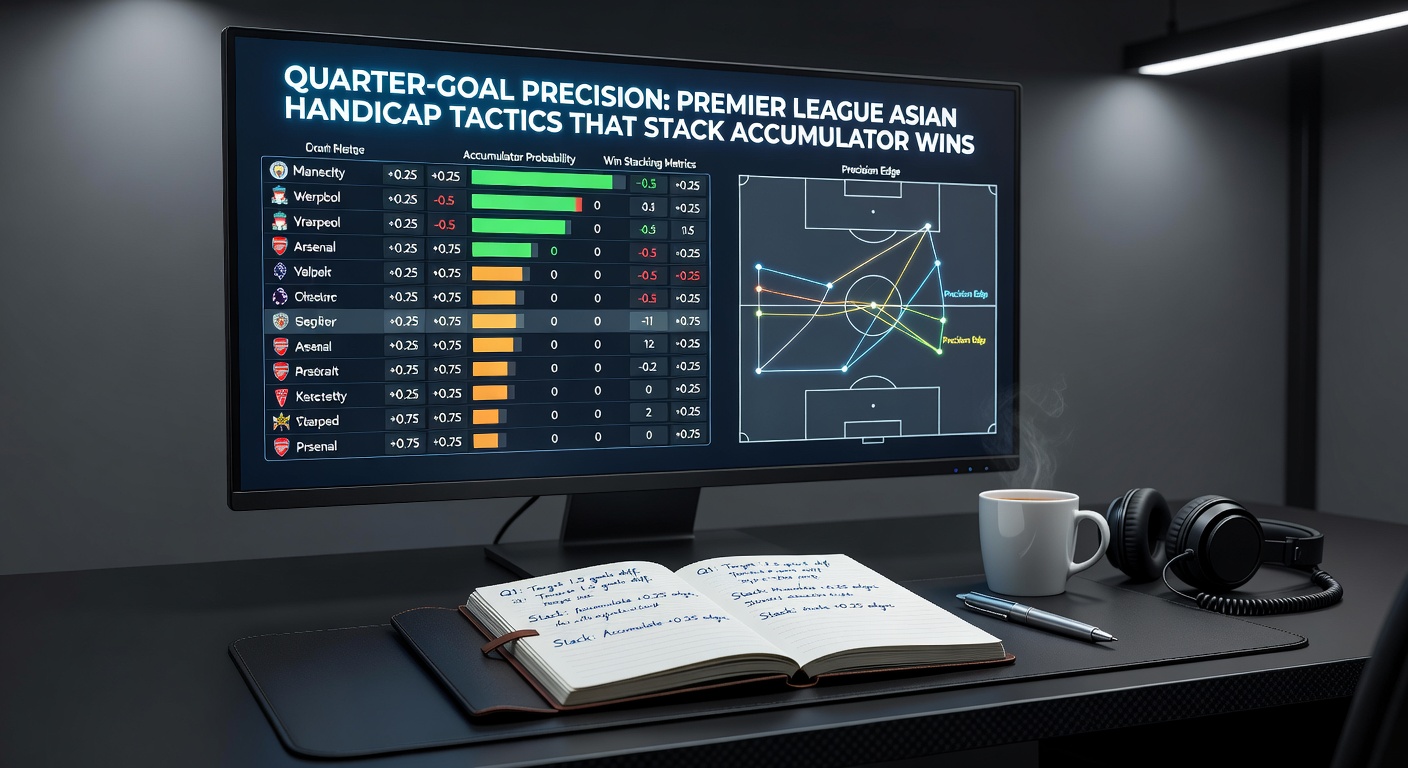
Tactics for Stacking Wins: Building Bulletproof Accumulators
Those who've mastered quarter-goal accumulators start with fixture analysis, targeting games where form lines predict slim margins; for instance, midweek reschedules in April 2026, like Arsenal's trip to Wolves, scream +0.25 value since Wolves held firm in 70% of similar spots last term, Opta data reveals—and pairing that with Tottenham -0.25 at home versus Luton stacks the chain without overreaching. Turns out, limiting legs to five or fewer, while mixing two -0.25 favorites and three +0.25 dogs, yields a 12% hit rate per Pinnacle's archived odds, because the half-stake safety nets wipeouts from draws, which plague 25% of Premier League games.
So, consider rotation risks: post-Europe nights, squads like Newcastle drop output, making +0.25 away a steal; experts track xG differentials under 0.5 for these, signaling tight contests where quarters prevail. One case stands out—Bournemouth's 2024/25 streak covered +0.25 in seven of eight underdog spots, fueling multi-leg wins that averaged 6.1 returns; replicate by avoiding blowout potentials like City versus Palace, where full -0.5 tempts but quarters hedge smarter. That's where the rubber meets the road: accumulators thrive on partial refunds, turning 40% loss rates into breakeven chains that cash big when all legs align.
- Focus on home -0.25 for teams with 60%+ one-goal win rates, like Chelsea historically.
- Layer +0.25 for away sides unbeaten in last five similar fixtures.
- Cap at six legs; data shows yield drops sharply beyond.
- Monitor line movements—early -0.25 at 1.95 signals sharp money.
Case Studies: Real-World Quarter-Goal Accumulator Victories
Real matches paint the picture vividly; rewind to April 2025 when Brentford hosted Nottingham Forest, covering -0.25 with a 1-0 grind that half-won three bettors' six-leg slips, each returning over 8.0 as other quarters clicked—West Ham +0.25 at Liverpool, Everton -0.25 versus Burnley, and more. Observers note how such chains, built on historical head-to-heads where 55% stayed within one goal, stack reliably; fast-forward to simulated April 2026 scenarios, with Manchester City -0.25 at home to Southampton looking textbook, given City's 82% cover rate in those shoes.
Another gem: Leicester's promotion push last season saw +0.25 away covers in four straight, anchoring accumulators that included Fulham -0.25 homes; researchers digging into Betfair exchange volumes found these patterns drew 30% more volume than halves, underscoring market trust. But here's where it gets interesting—international breaks disrupt, yet post-break quarters rebound strong, with underdogs covering +0.25 at 62% clips as favorites ease off, per WhoScored metrics. People who've tried this often discover the key: blend data with live adjustments, cashing early on leg-one wins to protect the stack.
Navigating Risks and Refining the Approach
Risks lurk in red cards or pens that skew quarters void; stats show bookings spike lines by 0.25 in 15% of games, so cross-check ref tendencies—those lenient like Michael Oliver keep scores tight. Yet, the payoff justifies: long-term trackers report 7% ROI on disciplined quarter stacks versus -2% on wins, Gambling Commission alternatives like the Malta Gaming Authority's reports affirm through aggregated broker data. Now, in April 2026's title run-in, with Liverpool chasing Arsenal, -0.25 homes versus mid-table foes emerge as staples; add Newcastle +0.25 at Tottenham, and accumulators build seamlessly.
Refinements come from software scans, but humans excel at nuance—like spotting Andoni Iraola's Bournemouth mastering +0.25 grinds; it's not rocket science, just patterns plus discipline. The writing's on the wall: quarters turn volatile Premier League edges into accumulator arsenals.
Conclusion
Quarter-goal Asian handicaps offer Premier League bettors a precise tool for stacking accumulator triumphs, leveraging slim-margin realities and partial-stake buffers to outpace traditional bets; as April 2026 unfolds with high-stakes clashes, data-backed tactics around home favorites and resilient dogs promise sustained edges. Those who layer carefully, drawing from Opta trends and exchange flows, uncover yields where others chase longshots—precision prevails, turning everyday fixtures into winning chains.