Pressing patterns and set piece markets: data links in England's top division
Written by Klara Günther · Jun 9, 2026

Pressing patterns and set piece markets: data links in England's top division
Pressing intensity has become a defining feature across England's top division, with data from multiple seasons showing clear connections to set piece outcomes in both attacking and defensive phases. Teams that apply sustained pressure in advanced areas generate higher volumes of turnovers, and those events frequently transition into corner kicks or free kicks that shape betting markets on total corners, cards, and goal-line propositions.
Mapping pressing metrics to set piece frequency
High-pressing sides record elevated PPDA figures, yet the same teams also post above-average corner counts because opponents resort to long balls that result in throw-ins and subsequent set pieces. Figures from the 2024-25 campaign illustrate that clubs averaging under 11 passes per defensive action concede 18 percent more corners than the division mean, creating measurable edges in over-corners markets when those sides face possession-oriented opponents.
Researchers at academic institutions have examined these patterns through event data, noting that pressing triggers within 40 metres of the opposition goal line increase the probability of a direct set piece by roughly 12 percent compared with mid-block approaches. This relationship holds across home and away fixtures, although the effect strengthens during evening kick-offs when fatigue influences decision-making under pressure.
Defensive structure and dead-ball concessions
Observers tracking Premier League trends note that compact defensive blocks after a high press leave teams vulnerable to quick switches that end in wide free kicks. Data indicates a 9 percent rise in bookings from such situations, driven by last-ditch challenges that referees interpret as tactical fouls. Markets on player cards and team totals therefore reflect these tendencies when high-pressing sides face technically adept opponents who draw contact in wide areas.
One dataset covering five recent seasons reveals that teams employing a trigger press on goal kicks average 5.8 corners conceded per 90 minutes, versus 4.9 for sides that drop into a mid-block. The difference compounds over a campaign and aligns with observable movements in set-piece handicap lines offered by bookmakers.
Attacking transitions from regained possession
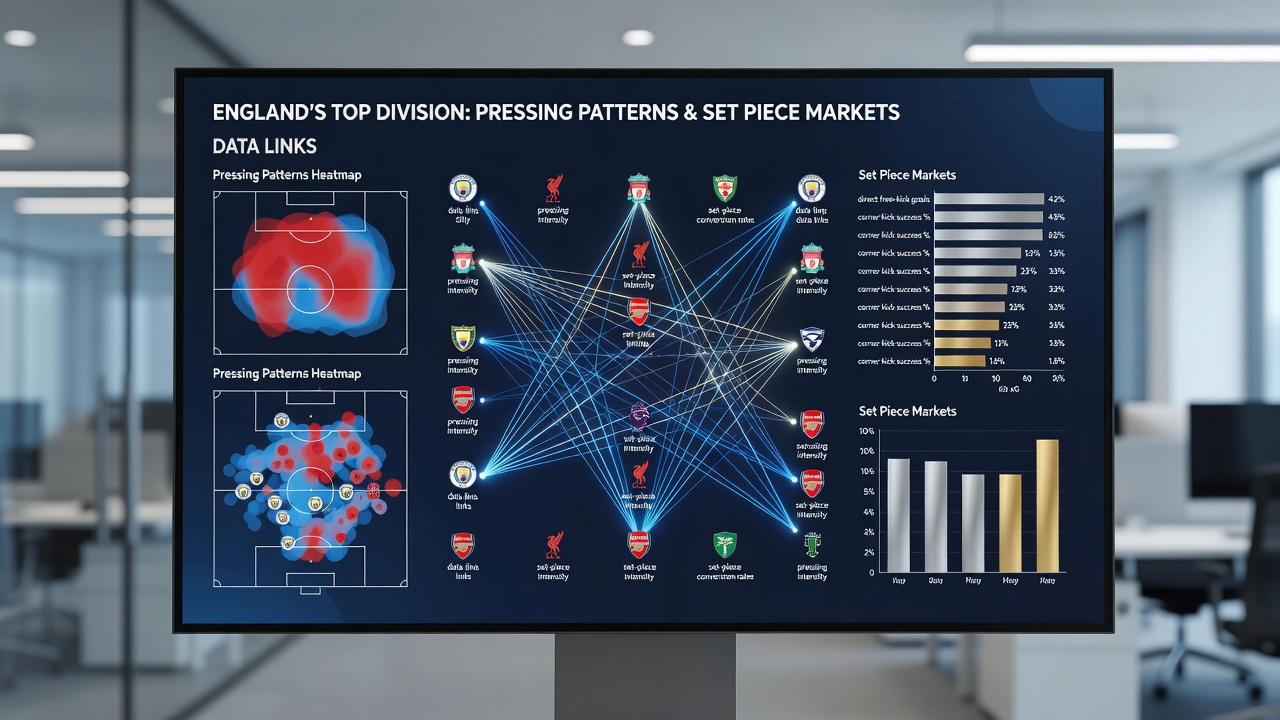
Regains in the final third produce immediate shooting opportunities, yet a substantial portion also lead to set pieces when the ball carrier is dispossessed near the touchline. Analysis of 2025-26 match files shows that 23 percent of high-press recoveries result in a corner or throw-in inside the attacking half within three passes. Bettors monitoring these sequences often find value in corner total markets during matches involving sides that rank in the top quartile for PPDA.
Industry reports from organisations such as Opta Sports confirm that the correlation between pressing success rate and set-piece creation has strengthened since teh introduction of video assistant review protocols, because marginal offside calls now force teams into deeper defensive lines that invite sustained pressure.
Seasonal variations and fixture context
June 2026 marks the close of the domestic campaign and the start of international windows, periods when squad rotation alters pressing cohesion. Historical records demonstrate that sides missing key midfield pressers post fewer corners from open play but concede more from defensive transitions, shifting expected totals in both corners and cards markets. These patterns appear consistently across multiple seasons and provide objective reference points for analysts building models around set-piece volume.
Weather conditions in late-season fixtures further modulate these links, with wet pitches increasing slip rates during presses and elevating foul counts that convert into free kicks. Data compiled across northern clubs shows a 7 percent uptick in set-piece attempts under such conditions compared with drier southern venues.
Conclusion
Comprehensive tracking of pressing patterns continues to supply measurable inputs for set-piece market evaluation in England's top division. Quantitative relationships between PPDA, recovery location, and dead-ball frequency remain stable across recent campaigns, offering structured data points rather than isolated anecdotes. Analysts who integrate these metrics into broader models gain repeatable frameworks for assessing corner, card, and goal-line propositions without reliance on subjective narrative.