Premier League Fixture Overload: Calendar Pressures Shaping Goal Markets
Written by Amir Friedrich · Aug 18, 2026

Premier League Fixture Overload: Calendar Pressures Shaping Goal Markets
Premier League schedules pack multiple competitions into short windows, and fixture pile-ups emerge when clubs balance league games with cup ties and European commitments. Data from recent seasons shows teams often face three matches within seven days during December and January stretches, while August periods around the 2026 campaign start carry similar density due to adjusted international calendars ahead of the expanded World Cup. Researchers tracking match intervals note that recovery time drops below 72 hours in roughly 25 percent of cases for top-six sides.
Patterns in Match Density
League officials publish fixture lists that account for broadcast demands and travel logistics, yet overlaps still occur when domestic cups and continental events align. A study of the 2023-2025 campaigns by sports analytics groups found that squads averaging more than one match every four days recorded measurable drops in high-intensity running distance. Those figures come from GPS tracking systems used across the division and align with reports issued by European football bodies.
Coaches respond with squad rotation, but even planned changes leave players managing accumulated fatigue. Midfielders and full-backs show the clearest declines in sprint count and pass accuracy after repeated short-turnaround games, according to performance databases maintained by the league.
Scoring Trends During Congested Windows
Goal totals shift when teams operate under compressed schedules. Historical match data indicates that fixtures played with less than three days between games produce an average of 2.4 goals compared with 2.8 in standard intervals. Lower output stems from reduced pressing intensity and fewer transitions into attacking zones, patterns documented in video analysis conducted by multiple Premier League clubs.
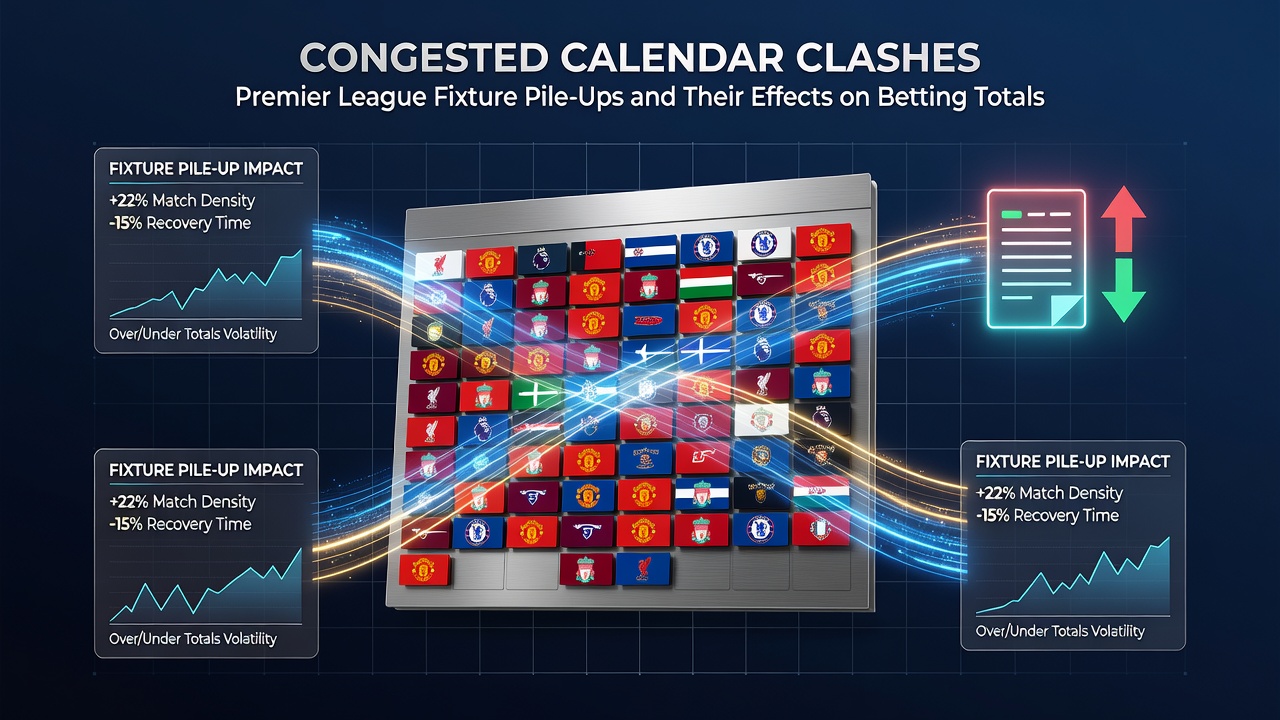
Under 2.5 goals markets gain traction in these slots, particularly when both sides rank in the bottom half of the table for shots on target. August 2026 fixtures may repeat this pattern if the post-tournament schedule compresses pre-season preparation, leaving squads less sharp for opening rounds. Betting exchanges reflect these tendencies through adjusted lines that move earlier in the week once lineups confirm heavy rotation.
Player Workload and Tactical Adjustments
Medical staff monitor acute workload spikes using metrics such as distance covered and accelerations. Reports compiled by the English Institute of Sport highlight that players exceeding 30 percent above weekly norms face elevated soft-tissue injury risk, which further thins attacking options. Managers therefore adopt compact defensive shapes that limit open play, resulting in higher percentages of long balls and set-piece attempts.
Teams with deeper benches absorb congestion better, while sides relying on a core group of starters see sharper drops in expected goals. Opta-derived models show expected goal values falling by 0.3 per team in triple-game weeks, a margin that influences over/under pricing across multiple bookmakers.
Market Reactions and Line Movements
Betting operators adjust totals markets once congestion indicators appear in published schedules. Historical odds movements reveal that under lines shorten by an average of 0.2 goals when two clubs meet after both completed midweek fixtures. Sharp bettors target these spots early, before public money pushes lines back toward standard levels.
Industry reports from bodies such as the European Gaming and Betting Association note increased volume on lower totals during winter months, while academic papers from sports science departments at universities in Australia and Canada document similar correlations between fixture density and reduced scoring. Those studies emphasize that weather compounds fatigue effects, yet schedule compression remains the primary driver.
Conclusion
Premier League fixture congestion produces measurable effects on goal output through documented reductions in player output and tactical conservatism. Data covering multiple seasons, combined with workload tracking and market records, shows consistent shifts toward lower scoring when recovery windows shrink. Observers tracking August 2026 and future dense periods can reference these patterns when evaluating totals markets across the campaign.