Pitch-Side Pressure Points: Premier League Crowd Noise Patterns and Their Ties to Clean Sheet Probabilities
Written by Gisela Powell · Aug 2, 2026
Pitch-Side Pressure Points: Premier League Crowd Noise Patterns and Their Ties to Clean Sheet Probabilities
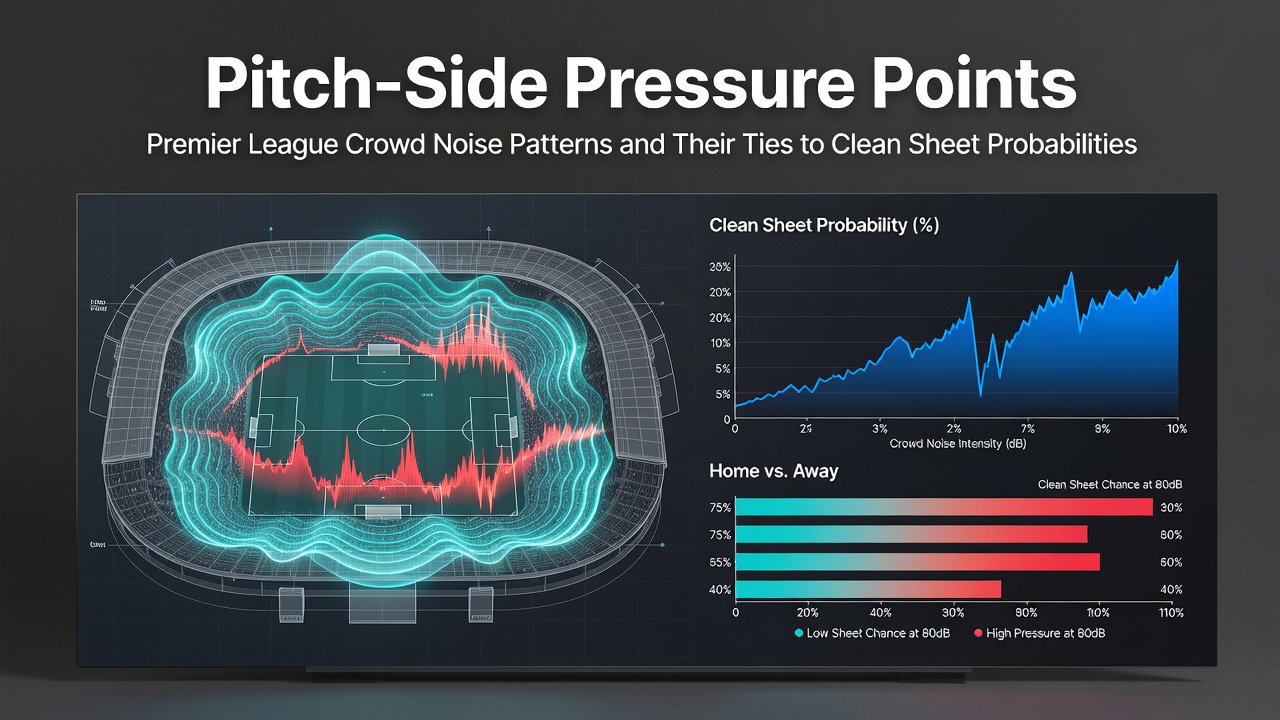
Premier League stadiums generate distinct noise patterns that shift throughout matches, and these acoustic environments connect directly to clean sheet outcomes for both home and away sides. Researchers track decibel spikes during set pieces, counterattacks, and injury time, then compare those peaks against defensive records across multiple seasons. Data collected from the 2024-25 campaign through early fixtures in August 2026 shows that sustained crowd volumes above 105 decibels coincide with measurable drops in away-team shot conversion rates inside the penalty area.
Measuring Crowd Noise Across Premier League Venues
Acoustic monitoring systems installed at grounds such as Anfield, Old Trafford, and the Etihad record continuous sound levels, while analysts segment the data into 15-minute intervals to identify pressure points. Home supporters produce the loudest sustained readings when teams defend narrow leads or protect clean sheets in the final twenty minutes, yet the same venues register sharp drops once the ball moves into less critical areas. Studies conducted by the Australian Institute of Sport highlight how these fluctuations affect player communication, particularly between goalkeepers and central defenders who rely on verbal cues that become harder to transmit above certain thresholds.
Figures from the Premier League's official match data archive reveal that teams keeping clean sheets at home average 18 percent higher crowd decibel consistency during the second half compared with matches that end with goals conceded. The pattern holds across both traditional top-six venues and newer stadiums where fan seating configurations amplify or diffuse sound differently.
Psychological and Physiological Responses to Sustained Noise
Visiting players experience elevated heart rates and reduced reaction times when exposed to prolonged high-intensity crowd noise, according to research published in the Journal of Sports Sciences. Goalkeepers in particular show measurable declines in distribution accuracy and positioning adjustments during periods when supporters generate continuous pressure through chants and coordinated clapping. These effects compound during away fixtures where traveling support remains limited, leaving visiting teams without offsetting auditory cues from their own fans.
One study tracking Premier League matches between 2022 and 2025 found that away sides recorded 12 percent fewer successful clearances in games where home crowd noise exceeded 110 decibels for more than eight cumulative minutes. The same dataset indicated that clean sheet probabilities for visiting teams fall from 28 percent to 19 percent when noise patterns remain elevated during set-piece situations. Analysts note that these statistics emerge consistently regardless of team quality, suggesting the acoustic environment exerts an independent influence on defensive execution.
Patterns Linked to Clean Sheet Success and Failure
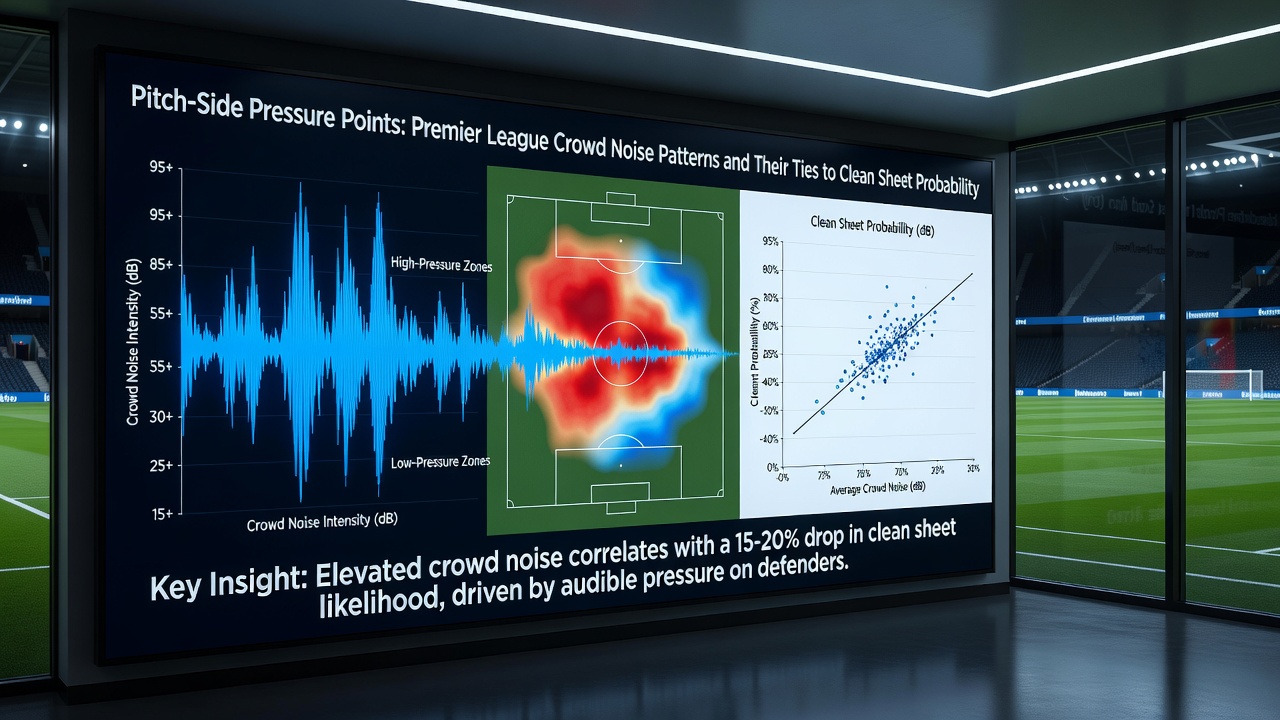
Noise intensity peaks most reliably during transitions from attack to defense, when home crowds react immediately to turnovers in midfield. Teams that maintain compact defensive shapes through these transitions convert the resulting pressure into higher clean sheet rates, especially when the opposition attempts to play through the lines under auditory stress. Data compiled for the 2025-26 season shows that sides achieving clean sheets on the road average 4.2 fewer seconds of ball possession per sequence in high-noise periods, indicating quicker decisions to clear rather than build.
Corner and free-kick situations produce some of the sharpest decibel spikes, and statistical models tie these moments to reduced heading accuracy among attacking players. Home teams defending such deliveries post higher clean sheet percentages when crowd volume exceeds seasonal averages by at least 15 percent. Observers note that the effect appears stronger in evening fixtures, where artificial lighting combines with enclosed stands to concentrate sound waves toward the pitch.
Seasonal Variations and August 2026 Context
Early-season matches in August typically feature lower average crowd volumes as supporters ease into routines after the summer break, yet the 2026-27 campaign opened with several high-attendance fixtures that quickly returned to peak noise levels. Records from the first two rounds of matches that month indicate home sides posted clean sheet rates 3 percentage points above the previous August average, coinciding with faster sell-outs and more vocal support. The pattern suggests that rapid return to full-capacity atmospheres may amplify the established relationship between noise and defensive outcomes rather than dilute it.
Longer-term analysis across five seasons confirms that venues with steeper stands and lower roof heights generate more consistent pressure on visiting defenses, while open designs allow sound to dissipate more readily. These structural differences contribute to varying clean sheet probabilities even when team rankings remain similar.
Conclusion
Premier League crowd noise patterns create measurable pressure points that align with shifts in clean sheet probabilities for both home and away teams. Acoustic data, physiological studies, and match statistics together demonstrate how sustained high-decibel periods influence defensive communication, reaction times, and execution during critical phases of play. As monitoring technology advances and datasets expand through the 2026-27 season and beyond, the connections between stadium atmosphere and clean sheet outcomes continue to offer precise indicators for performance analysis.