Pitch Condition Variations and Their Influence on Expected Goals in Professional Football
Written by Amir Friedrich · Jun 7, 2026
Pitch Condition Variations and Their Influence on Expected Goals in Professional Football
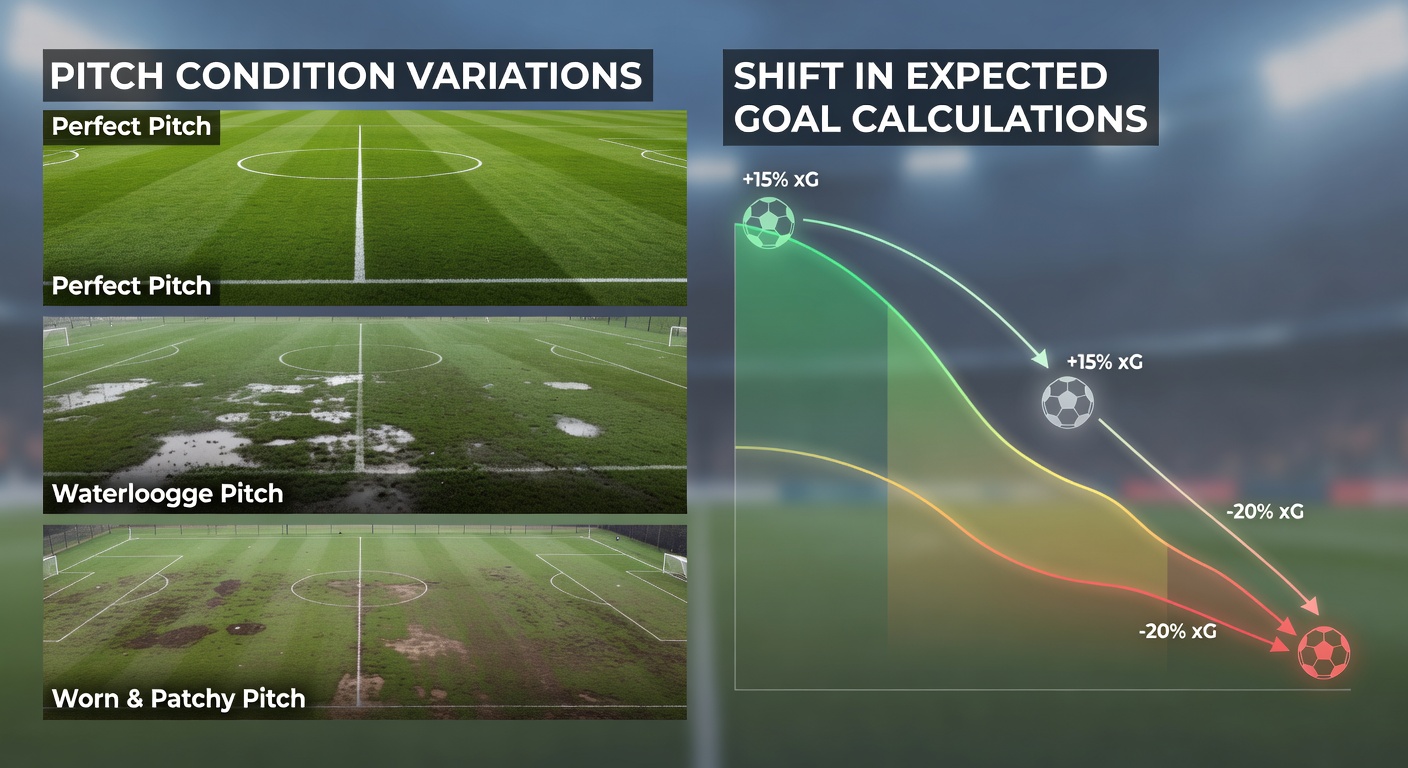
Pitch surfaces in professional football range from firm and dry to soft and waterlogged, and each state alters ball behavior along with player movement in measurable ways that feed directly into expected goal models. Analysts track these shifts because even small changes in bounce height or roll speed modify the probability assigned to shots from identical locations. Data from multiple leagues shows that xG values recalibrate when pitch metrics such as moisture content, grass length, and root density deviate from baseline standards used in initial model training.Key Pitch Variables That Affect Play
Grass height stands out as a primary factor because longer blades slow the ball and increase friction while shorter cuts allow quicker movement and lower trajectories. Researchers at the FIFA Technical Division have documented how cuts above 25 millimeters reduce ground pass completion rates by measurable margins compared with standard 20-millimeter heights maintained at elite venues. Moisture levels add another layer since saturated turf increases stopping distance on through balls yet reduces sliding tackle effectiveness, prompting models to adjust the weighting given to shots taken after longer build-up sequences.
Wear patterns near goalmouths and center circles create uneven patches that cause unpredictable deflections, and these zones receive special attention in post-match data reviews because they elevate the chance of blocked attempts. Temperature also plays a role, with cooler conditions in northern European winter fixtures often leaving surfaces firmer and faster, whereas summer heat in southern competitions can soften pitches by midday. Observers note that these environmental elements combine to shift the underlying distributions used in xG algorithms, requiring teams to update coefficients rather than rely on static pitch assumptions.
Impact on Expected Goal Calculations
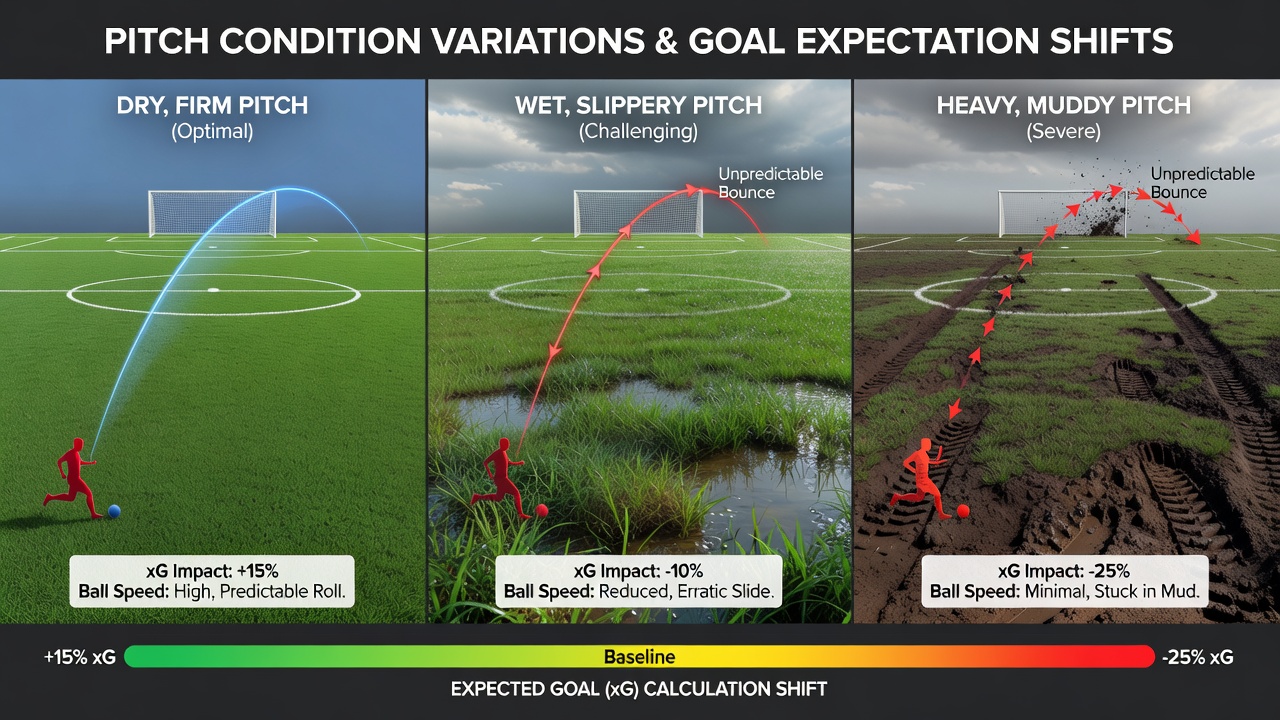
Expected goal frameworks begin with spatial data that records shot location, angle, and distance, yet they incorporate secondary variables once pitch reports arrive from grounds staff. When ball speed drops on heavier surfaces, the same shot location receives a lower xG rating because fewer successful finishes occur under those conditions according to historical datasets. Conversely, faster pitches raise the value of long-range efforts since the ball reaches the target with greater velocity and less time for defenders to close space.
Models trained on multiple seasons adjust through regression techniques that weigh recent pitch measurements against past outcomes at the same stadium. Studies from the Australian Institute of Sport have quantified how surface hardness correlates with changes in shot conversion rates, supplying coefficients that operators apply during live updates. These recalibrations become especially visible in tournaments where venues rotate frequently, such as the preparations underway for the 2026 FIFA World Cup across North American sites where grass species and irrigation protocols differ by region.
Real-World Examples From Recent Seasons
One match at a northern English ground after heavy overnight rain produced noticeably lower xG totals for both sides despite identical shot locations recorded in prior fixtures on the same pitch. Analysts attributed the drop to increased friction that limited first-time finishes, and post-game reviews confirmed that the model had applied a surface-specific multiplier derived from moisture sensor readings. In contrast, a fixture played on a newly relaid pitch in Germany yielded elevated xG for set-piece attempts because the firmer surface improved delivery accuracy and reduced defensive clearances.
Case records compiled by performance analysts show that artificial surfaces introduce their own adjustments since consistent roll speeds and higher bounce heights alter the timing of volleys and headers. Although natural grass remains standard in most top divisions, hybrid systems used at several major stadiums create intermediate conditions that sit between the two categories and require dedicated calibration sets within xG pipelines.
Model Adjustments and Data Integration
Teams and data providers integrate pitch reports through standardized metrics that include shear strength, infiltration rate, and thatch depth, each feeding separate correction factors. When these inputs update, the revised probabilities propagate through possession chains and shooting events, ensuring that cumulative xG reflects the actual conditions rather than league-wide averages. Research published in the Journal of Sports Sciences demonstrates that incorporating surface variables reduces prediction error by several percentage points across large match samples, confirming the value of continuous monitoring.
Stadium operators supply these readings through automated sensors installed beneath the turf, and the resulting streams reach analysts within hours of kickoff. This flow allows expected goal engines to refresh coefficients dynamically rather than waiting for end-of-season reviews, a practice that has become routine ahead of high-stakes fixtures including those scheduled during the 2026 international window.
Conclusion
Pitch condition data now forms a standard input layer in professional expected goal systems because surface characteristics directly modify the outcomes that models seek to predict. Variations in grass length, moisture, and wear produce quantifiable shifts that require explicit calibration, and organizations continue to refine these adjustments through ongoing data collection at venues worldwide. As preparation for the 2026 World Cup advances, further standardization of measurement protocols will likely tighten the relationship between recorded pitch states and calculated goal probabilities across competitions.