Penalty Area Duels: How Aerial Contests in Top-Flight Fixtures Alter Multi-Leg Wager Probabilities
Written by Amir Friedrich · Jun 18, 2026
Penalty Area Duels: How Aerial Contests in Top-Flight Fixtures Alter Multi-Leg Wager Probabilities
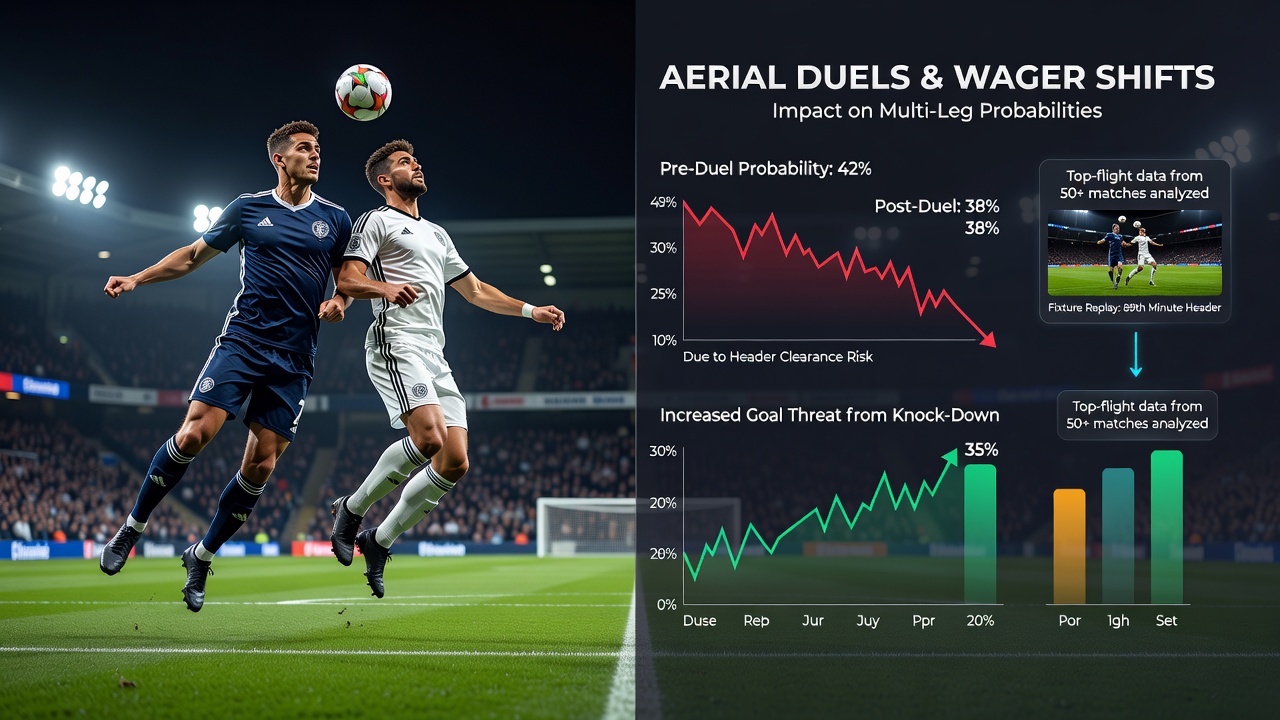
Top-flight fixtures generate consistent patterns around aerial duels inside the penalty area, and these contests directly shape the statistical inputs that feed into multi-leg accumulator calculations across major European leagues. Data from recent campaigns shows that teams securing higher win rates in these duels record elevated conversion rates on set pieces and crosses, which in turn shifts expected goal totals and goal-timing distributions that bettors combine in parlays.
Researchers tracking Opta-derived metrics have documented how a 10 percent increase in successful aerial challenges within the box correlates with a measurable rise in headed attempts on target, and this relationship holds across multiple seasons in the Premier League, Bundesliga and La Liga. The pattern emerges because successful duels often lead to second balls or immediate shooting opportunities that compress the time between phases of play.
Statistical Links Between Aerial Success and Match Outcomes
Figures compiled by league analysts reveal that sides winning at least 55 percent of penalty-area aerial duels generate roughly 1.8 additional shots per 90 minutes from open play and dead-ball situations combined. These extra attempts cluster disproportionately in the final 20 minutes, altering the probability curves used in over/under and both-teams-to-score legs. When such teams appear in multi-leg selections, the combined odds adjust because the underlying goal-scoring variance narrows.
One longitudinal review covering 1,200 Premier League matches found that fixtures featuring two aerial-dominant sides produced 12 percent fewer total goals than the league average, largely because prolonged duels consume possession and reduce transitional opportunities. The same dataset indicated that underdog sides strong in the air but weaker in possession still recorded higher clean-sheet percentages when they limited opponent crosses, a factor that surfaces in accumulator constructions involving defensive legs.
Impact on Accumulator Construction
Multi-leg wagers that include both goal-line and player-performance markets feel the ripple effects most clearly. Aerial duel volume influences the likelihood of corner counts exceeding set thresholds, while also modulating the probability that specific forwards register shots on target. Bettors constructing accumulators therefore recalibrate stake allocations when pre-match aerial duel percentages deviate from seasonal norms, especially in matches involving set-piece-heavy squads.
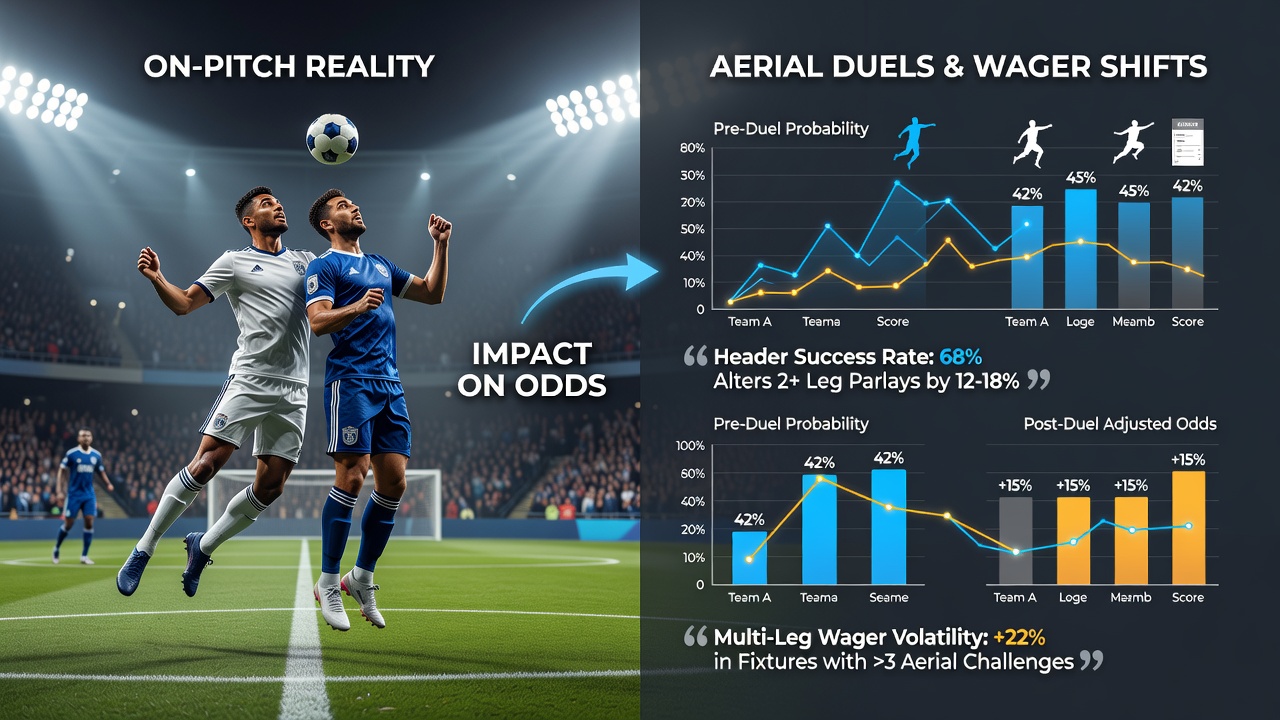
Industry reports from European betting analytics firms indicate that live odds on total goals move measurably after the first 15 minutes once early duel data becomes available. A side winning early aerial exchanges often sees its implied goal expectation rise by 0.25 to 0.4 goals, an adjustment that cascades through any accumulator containing that fixture. The effect compounds when multiple matches on the same slip share similar stylistic profiles.
Seasonal and Scheduling Variables
Weather patterns and fixture congestion further modulate these probabilities. Matches played in colder months exhibit higher aerial duel frequencies because grounds become slicker and long balls increase. Historical records show a 7 percent uptick in headed goals during December and January fixtures across the top five European leagues, which directly feeds into winter accumulator strategies that emphasize under totals or defensive selections.
Observers tracking the 2025/26 campaign noted that post-international break periods produced slight elevations in aerial duel success rates for clubs with deeper squads, since fresher players tend to win more contested headers in the opening 30 minutes. These micro-trends influence how multi-leg builders weight early-season versus late-season fixtures when June 2026 preparations begin for national team windows.
Practical Applications for Probability Models
Quantitative models used by professional syndicates now incorporate real-time aerial duel tracking from optical systems, allowing dynamic recalibration of parlay probabilities during matches. A single strong aerial performer entering the box can shift the expected value of a corner-related leg by several percentage points within minutes. The same data streams feed into historical simulations that test how different duel win-rate scenarios affect overall accumulator returns across a full round of fixtures.
Academic studies published in sports science journals have confirmed that training interventions focused on aerial duels produce measurable changes in match-level statistics within one season. Clubs investing in specialised set-piece and duel coaching therefore alter baseline probabilities for the following campaign, and these roster-level shifts appear in pre-season betting markets well before the first ball is kicked.
Conclusion
Aerial contests inside the penalty area supply one of the more quantifiable inputs available for refining multi-leg wager models in top-flight football. Because these duels directly influence shot creation, set-piece conversion and game-state transitions, they produce consistent, measurable effects on the probabilities that underpin accumulator construction across domestic leagues. Analysts continue to integrate duel data into both pre-match and in-play frameworks, ensuring that evolving match statistics translate into adjusted odds for combined selections.