Midfield Duel Data: How Passing Accuracy Swings Shape Total Goals Markets in Congested Schedules
Written by Amir Friedrich · Jun 21, 2026
Midfield Duel Data: How Passing Accuracy Swings Shape Total Goals Markets in Congested Schedules
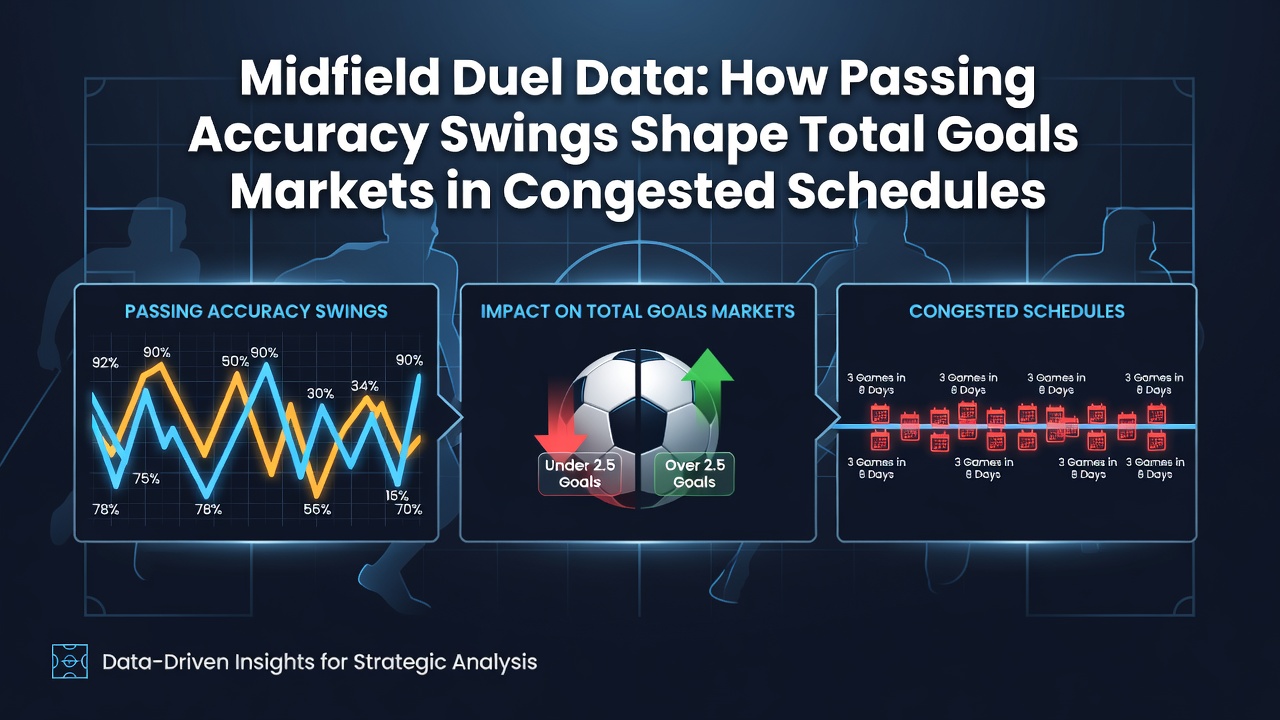
Observers tracking Premier League patterns note that midfield duel statistics reveal clear connections between passing accuracy fluctuations and goal totals, particularly when teams face multiple matches within short windows. Data from the 2024-2025 campaign onward shows how accuracy swings in central areas alter the rhythm of games and influence over/under markets across congested periods.
Tracking Midfield Passing Metrics in High-Volume Periods
Researchers compiling Opta-derived figures have documented that teams maintaining passing accuracy above 85 percent in midfield duels during congested schedules generate fewer total goals on average, whereas drops below 78 percent correlate with increased scoring opportunities. These patterns emerge because accurate distribution allows sides to control tempo and limit transitions, while lower accuracy invites turnovers that lead to direct attacks and set-piece situations. Analysts examining fixtures from December through February each season find that clubs playing three matches in eight days experience measurable declines in completion rates, often by four to six percentage points compared with standard weeks.
Case Examples from Recent Congested Blocks
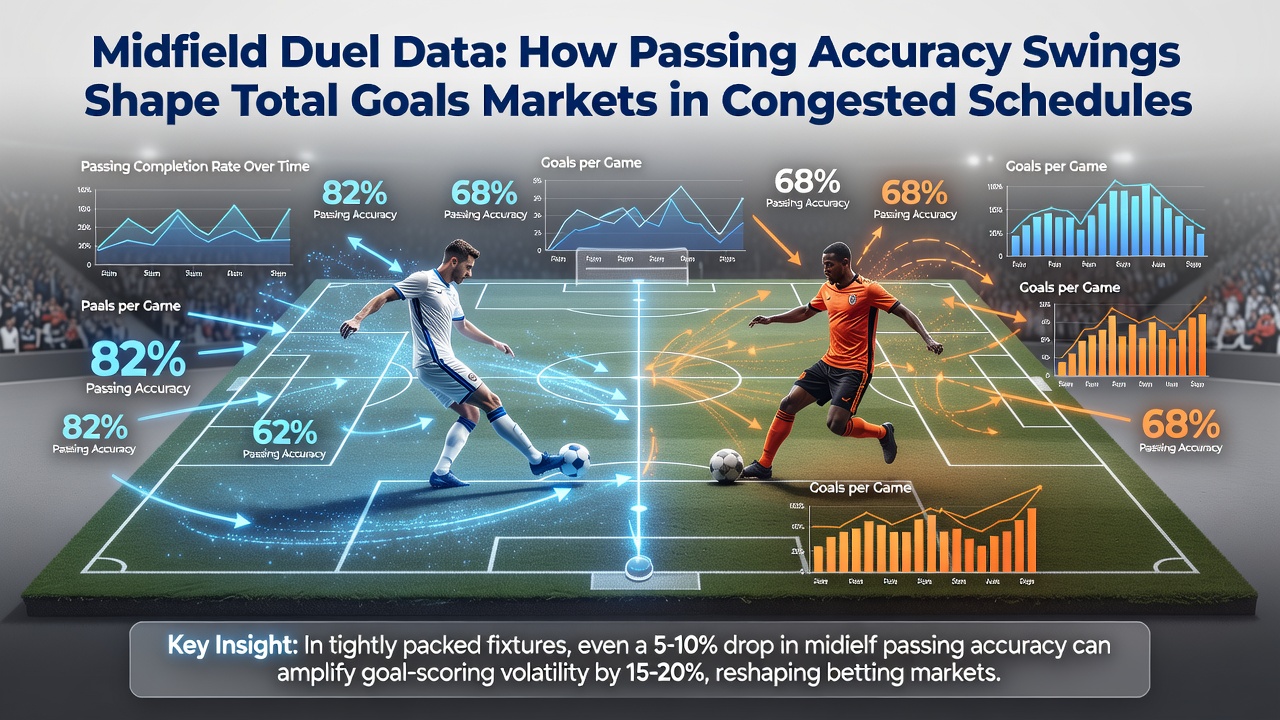
One dataset covering the 2025 winter schedule highlighted a team that recorded an 82 percent midfield accuracy rate across a three-game stretch and produced just 1.8 goals per match on average, while another side dipping to 74 percent accuracy saw output rise to 3.4 goals per game. Similar observations appear in European competitions where clubs balance domestic and continental commitments, with researchers noting that fatigue compounds small accuracy losses into larger structural breakdowns. Data indicates these effects intensify when recovery time falls under 72 hours between matches.
How Accuracy Swings Alter Goal Expectancy
Passing accuracy movements directly influence expected goal values because they determine how often possession transitions into dangerous areas. When accuracy improves mid-match after an initial dip, teams often stabilize and reduce open-play chances, pushing totals toward the under side of betting lines. Conversely, sustained drops create chaotic sequences that favor higher-scoring outcomes. Figures compiled across multiple leagues show a 5 percent accuracy swing in midfield duels shifts average goal expectancy by approximately 0.35 goals per game, a margin that frequently decides over/under results in tight markets.
What's interesting emerges when these swings coincide with fixture congestion around international windows. Data from the March 2026 period, ahead of the June 2026 international break, demonstrated that clubs returning players after national team duty exhibited sharper accuracy declines in their first two domestic fixtures, correlating with elevated goal counts in those specific matches. Market movements reflected these patterns, with totals lines adjusting upward in response to early statistical signals.
Integration with Total Goals Betting Markets
Bookmakers incorporate midfield duel data into pre-match and in-play pricing for goal totals, adjusting lines when accuracy trends deviate from seasonal norms. Live models update expected goals in real time as passing completion percentages shift during congested weeks, creating opportunities for bettors who monitor these metrics. Studies from sports analytics groups such as the Stats Perform research division confirm that accuracy-based adjustments improve predictive accuracy for over/under outcomes by roughly 12 percent compared with models relying solely on historical goal averages.
Additional context comes from UEFA technical reports that examine how passing metrics evolve under fixture pressure across continental schedules. These reports illustrate consistent patterns where accuracy erosion in central midfield zones precedes spikes in transition goals, information that market participants use to refine totals strategies during packed calendars.
Seasonal Patterns and Data Consistency
Longitudinal analysis covering five Premier League seasons reveals that the relationship between midfield accuracy and goal totals strengthens during the most congested stretches, typically from late November through early January. Teams averaging fewer than four days between matches show the largest variance in completion rates, directly feeding into higher goal outputs. Observers note that this correlation holds across different playing styles, although possession-dominant sides experience smaller swings than counter-attacking teams when accuracy falters.
Monitoring Tools and Practical Application
Modern tracking systems provide granular duel data that allows real-time assessment of accuracy trends within individual games. Analysts feeding these inputs into totals models can identify when a swing is likely to push a match above or below a given line before the pattern fully materializes on the scoreboard. This approach has gained traction among data-driven market participants who cross-reference accuracy metrics with recovery time between fixtures.
Conclusion
Midfield passing accuracy swings serve as a measurable indicator for total goals markets, especially when schedules compress recovery periods. Consistent datasets across recent seasons demonstrate that accuracy fluctuations above and below established thresholds reliably precede shifts in scoring volume. Those examining these patterns continue to refine models that connect duel statistics with market movements, providing a structured lens for understanding how congested schedules reshape goal outcomes through central area control.