Media Day Maneuvers: Tracing Premier League Manager Comments to Betting Market Shifts
Written by Katja Peters · Jun 28, 2026
Media Day Maneuvers: Tracing Premier League Manager Comments to Betting Market Shifts
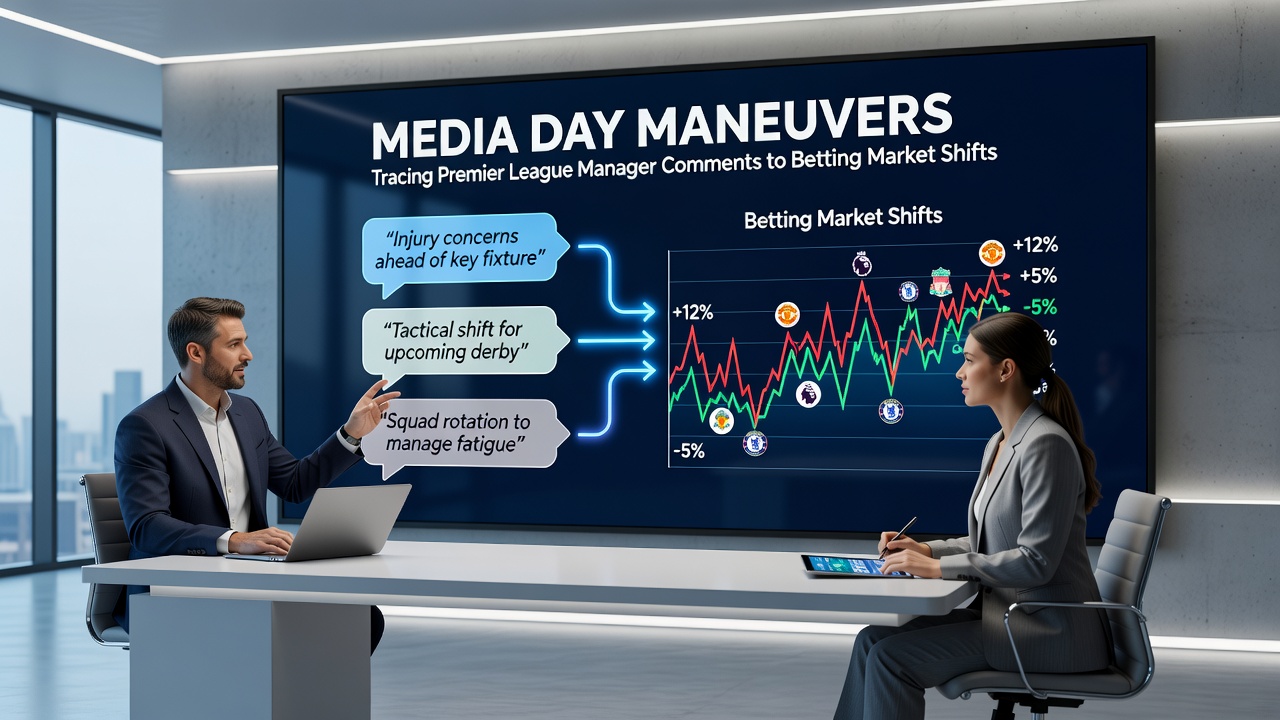
Premier League media days create structured windows where managers field questions about injuries, tactics, and squad selections, and those exchanges frequently precede measurable movements across betting exchanges and bookmaker platforms. Data from multiple European markets shows that specific phrasing on player availability or mindset often correlates with rapid recalibrations in goal-line and handicap lines, particularly when comments reach wide audiences through live broadcasts and social clips. Observers note that these sessions occur two or three days before fixtures, giving markets time to incorporate new information before official team sheets appear.
How Press Conference Language Influences Odds
Analysts track verbatim transcripts and compare them against timestamped odds logs, revealing patterns where mentions of rotation or fatigue trigger shifts in totals markets while injury updates alter both outright results and player prop lines. Research from the University of Sydney's sports analytics group indicates that quotes emphasizing defensive organization tend to compress over/under spreads within thirty minutes of publication, whereas upbeat assessments of attacking personnel can widen those same intervals by similar margins. Exchanges record these adjustments through volume spikes that exceed normal pre-match baselines, demonstrating that participants treat manager statements as actionable signals rather than mere commentary.
Documented Examples Across Recent Seasons
One notable instance involved a mid-table side whose manager referenced an unavailability for a key midfielder during a Friday media day, after which the team's win probability dropped two percentage points on major platforms within the first hour. Another case saw a top-six manager describe squad depth in positive terms ahead of a congested schedule, prompting an immediate uptick in away-win liquidity for their upcoming fixture. Figures compiled by the European Gaming and Betting Association illustrate that such movements occur most consistently when the comments address starting lineups rather than abstract motivation, because markets already price motivation into baseline odds while fresh personnel details provide clearer edges.
Live odds feeds capture these ripples through automated scraping tools that flag deviations beyond standard variance thresholds. Bookmakers adjust limits and margins accordingly, while sharp bettors monitor multiple sources simultaneously to identify where information asymmetry persists longest. In June 2026, pre-season media obligations for the 2026-27 campaign already produced similar early signals around fitness and transfer integrations, with several clubs releasing comments that altered futures markets before the first competitive fixtures.
Tracking Mechanisms and Market Response Times
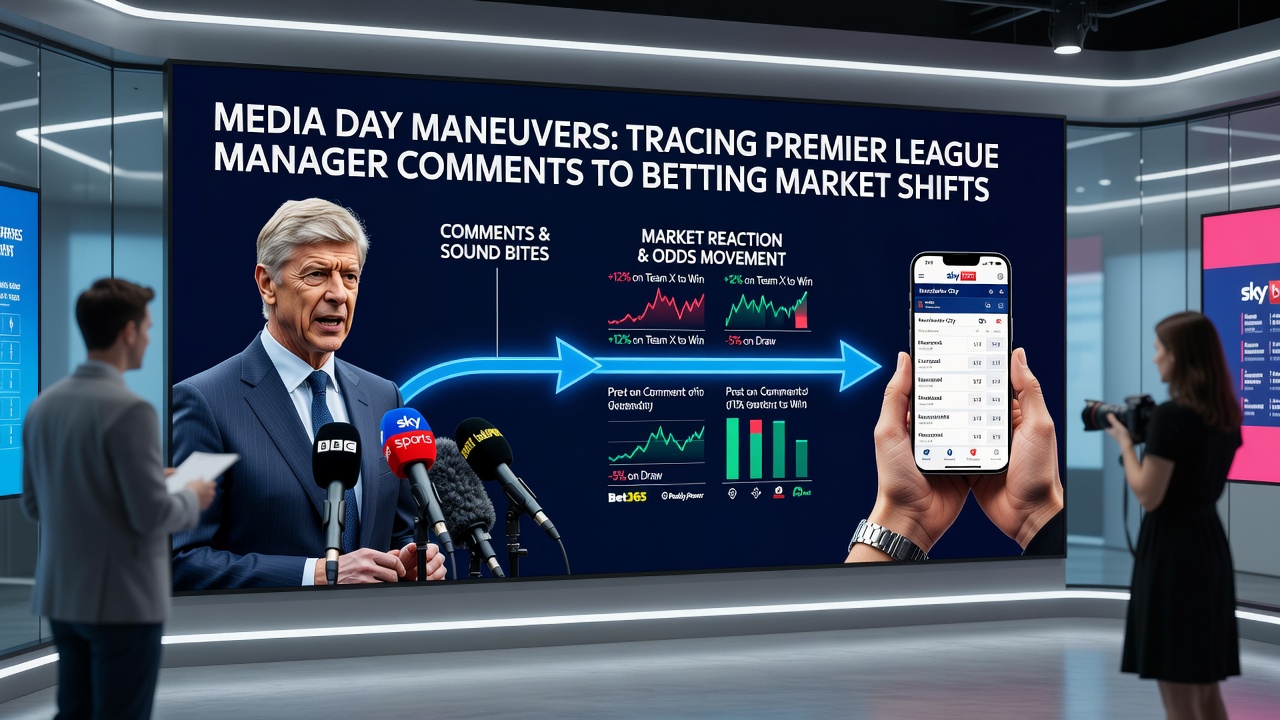
Specialist monitoring services compile manager quotes alongside exchange tick data, allowing quantitative comparison of comment sentiment scores against subsequent price action. Positive or negative keywords receive weighted values that researchers correlate with liquidity changes, producing heat maps that highlight which managers generate the largest downstream effects. Studies reveal that clubs with high media visibility tend to produce faster reactions because their press conferences reach broader audiences through dedicated coverage, whereas lower-profile teams generate slower but occasionally sharper adjustments when unexpected details emerge.
Regulatory frameworks in several jurisdictions require operators to maintain audit trails of odds alterations, and these records further confirm that manager-driven shifts cluster around scheduled media windows rather than random timing. Automated systems now flag potential manipulation risks when volume surges coincide with unofficial leaks, yet official press conference remarks remain the primary driver in documented cases. Those who model these interactions note that the strongest correlations appear in the twenty-four hours immediately following each session, after which information diffuses and markets stabilize ahead of matchday.
Broader Implications for Information Flow
Media day protocols continue to evolve with clubs adopting tighter messaging guidelines, yet the underlying dynamic persists because public obligations remain part of league schedules. Data aggregators increasingly integrate natural language processing to score transcripts in real time, feeding predictive models that anticipate line movements before human traders finalize adjustments. Such tools highlight recurring themes, including how references to weather or pitch conditions rarely move markets while direct statements on personnel or tactics consistently do. The pattern holds across multiple seasons and demonstrates that market participants treat these briefings as reliable, if imperfect, information channels.
Conclusion
Premier League media days function as predictable nodes in the information ecosystem surrounding match preparation, and their outputs continue to register across betting platforms through measurable shifts in pricing and volume. Systematic tracking of manager statements alongside exchange data provides observers with repeatable methods for identifying when and how those comments translate into market activity, particularly when the remarks address concrete squad details rather than general assessments. As monitoring techniques advance and pre-season cycles like the one unfolding in June 2026 generate fresh examples, the connection between press conference content and odds recalibration remains a documented feature of contemporary football markets.