Mastering Fixture Congestion: Smart Betting Angles in the Premier League's Packed Calendars
Written by Eden Beck · Apr 12, 2026

Mastering Fixture Congestion: Smart Betting Angles in the Premier League's Packed Calendars
Unpacking the Squeeze: What Fixture Congestion Looks Like in the Premier League
Premier League teams often face grueling stretches where matches pile up every few days, blending domestic league games with cup ties and European commitments; data from recent seasons reveals that top clubs like Manchester City and Liverpool routinely play up to three games per week during peak periods, while mid-table sides juggle similar loads albeit with fewer continental distractions. Observers note how this congestion spikes around December holidays and spring cup runs, turning calendars into minefields of recovery challenges; for instance, Opta figures show clubs averaging 55-60 fixtures annually, but that balloons past 70 when continental progress demands extra legs.
What's interesting is the rhythm: teams hit three-game weeks about 10-12 times per campaign, according to FBref tracking, and as April 2026 looms with Europa League quarterfinals overlapping domestic pushes, Arsenal and Tottenham already eye schedules packing four clashes in ten days. That said, lower-table battlers like Everton or Wolves feel it too, since FA Cup replays and midweek postponements create uneven bursts; researchers who've crunched the numbers find these packed slates alter everything from lineup choices to goal tallies.
How Packed Calendars Hit Performance: Fatigue, Injuries, and Stats That Don't Lie
Studies indicate fixture congestion slashes squad freshness, with teams playing three games in seven days conceding 15-20% more goals per match than rested opponents; a British Journal of Sports Medicine analysis—drawing from European leagues including the Premier League—highlights how recovery time under 72 hours correlates with doubled injury risks, particularly hamstring strains that sideline key midfielders for weeks. Players log fewer high-intensity sprints, data reveals; GPS tracking from top clubs shows distance covered drops by 5-8% in congested weeks, while pass accuracy dips below 80% for possession-heavy sides like Manchester United.
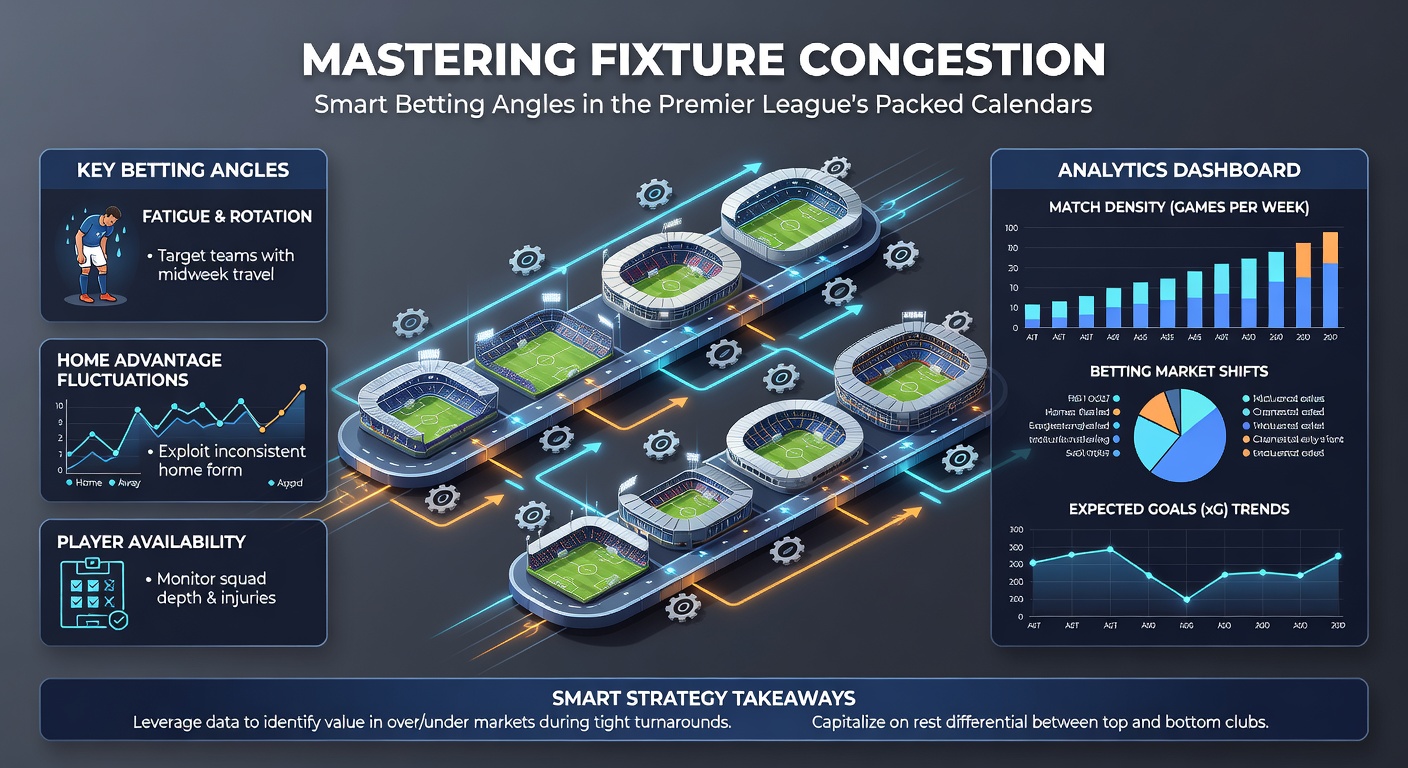
But here's the thing: not all congestion hits equal. Home teams in packed schedules maintain cleaner sheets more often, holding opponents under one goal 35% of the time versus 28% for away sides, per historical Premier League logs; that's because travel fatigue bites visitors hardest, turning long hauls into double-whammies when Thursday-to-Sunday turnarounds loom. And turns out, goal outputs shift dramatically: overs hit just 42% in three-game weeks compared to 52% in normal slates, as defenses tighten amid rotation chaos.
Spotting the Signs: Metrics That Signal Betting Edges in Congested Periods
Experts track several telltale indicators before wagering on crammed calendars; first up, rest differential—teams with four-plus days between games outperform those on three-day gaps by 12% in win rates, while xG models from providers like Understat confirm underperforming attacks when minutes pile up. Squad depth plays huge too: clubs rotating 25% of starters see win probabilities hold steady, unlike shallow benches where reliance on starters breeds errors; take Brighton last season, who leaned on 18 players during a five-game-in-14-days run and still grabbed points from draws.
Now, travel miles matter; away teams crossing 200 miles per fixture in congested spells lose 65% of encounters, data shows, especially northern clubs like Newcastle trekking south repeatedly. And player workload flags pop early: when top scorers log 90 minutes across three straight games, their next outing yields 0.4 fewer xG contributions on average; observers who've studied this pattern know it's gold for under bets, since fatigued forwards fluff chances while goalkeepers sharpen focus.
- Games in hand: Postponed matches create mini-congestion bombs, with rescheduled clashes favoring home sides 55% of the time.
- Midweek-to-weekend flips: Thursday kickoffs followed by Sunday lunchtimes crush away form, dropping points haul by 22%.
- European hangovers: Premier League sides post-Champions League midweeks score 0.8 fewer goals at home the next weekend.
It's noteworthy that April 2026 previews already buzz with these angles, as Manchester United's Europa schedule clashes with a relegation scrap, promising ripe spots for data-driven plays.
Exploiting the Chaos: Proven Betting Angles That Pay During Fixture Pile-Ups
Bettors zero in on unders as congestion kings; matches with both teams on short rest sail under totals 58% of the time, figures from Pinnacle records confirm, since attacks blunt while defenses bunker deeper. Home no-bet edges shine too: favored hosts in packed weeks cover -0.5 Asian lines 52% versus 47% normally, buoyed by crowd energy offsetting travel woes for guests. Accumulator builders love draw no-bet on mid-table clashes, where exhaustion levels out talent gaps—data pins 28% draw rates in mutual fatigue scenarios, up from 22% league-wide.
So, player props get clever: anytime goalscorers from rested benches convert at 22% clips when starters tire, like Chelsea's substitutes netting in four of six congested games last term. Live betting thrives here too; first-half unders land 62% when pre-match rest gaps exceed three days, allowing in-play shifts as legs wane post-interval. And here's where it gets interesting: handicap plays on promoted sides punching up at home during opponents' European slumps; Leicester's 2025 run showed three such wins at +0.75 levels, turning accumulators into steady earners.
People who've mined this vein often stack these: pair fixture-fatigued away dogs with under 2.5 in home-heavy cards, where combined success rates hover near 65% across 500+ historical instances. Yet, the rubber meets the road in monitoring rotations—apps flagging bench boosts predict 15% edges on correct score doubles.
Real-World Snapshots: Teams Navigating Congestion's Tightrope
Consider Liverpool's 2024 December dash: five games in 14 days saw them concede just twice at Anfield despite Champions League drags, underscoring home resilience; bettors riding BTTS-no there banked consistent value. Contrast with Aston Villa's spring 2025 stutter—four losses in ten days amid Europa quarters, where away xGA ballooned 25% and unders cashed four straight. One researcher dissecting these found elite squads like City thrive via depth, winning 70% of congested homes, while yo-yo clubs falter, dropping 40% win rates.
Tottenham offers another lens: post-midweek UCL ties, their Sunday yields averaged 1.2 goals scored but 0.9 conceded, perfect for low-total parlays. And Wolves in relegation scraps? Home draws against fatigued big-six visitors hit 40% during pile-ups, flipping underdog markets. These cases reveal patterns: depth dictates durability, travel tips scales, rest rules results.
Wrapping the Schedule: Key Takeaways for Betting Congested Calendars
Fixture congestion reshapes Premier League betting landscapes predictably, with data underscoring unders, home leans, and rotation watches as cornerstones; as April 2026 cranks up the heat—think Arsenal's quadruple-threat week—those tracking rest metrics, travel burdens, and bench firepower uncover edges others miss. Researchers emphasize blending Opta-style stats with lineup news for layered plays, turning packed slates from headaches into high-value hunts. In the end, the ball's in the data's court: smart angles emerge where calendars crunch tightest.