Long-range Shooting Surges Reshaping Premier League Totals Market Patterns
Written by Eden Beck · May 31, 2026
Long-range Shooting Surges Reshaping Premier League Totals Market Patterns
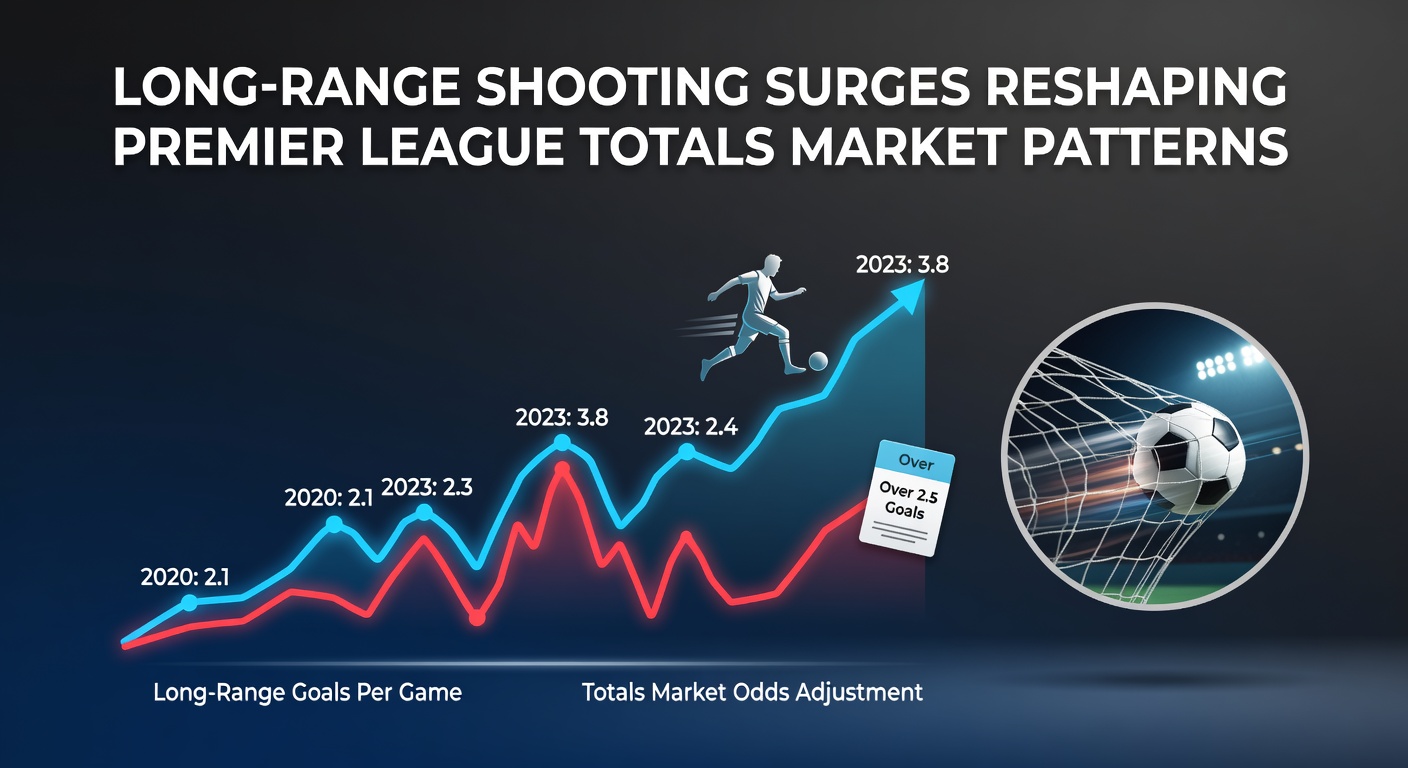
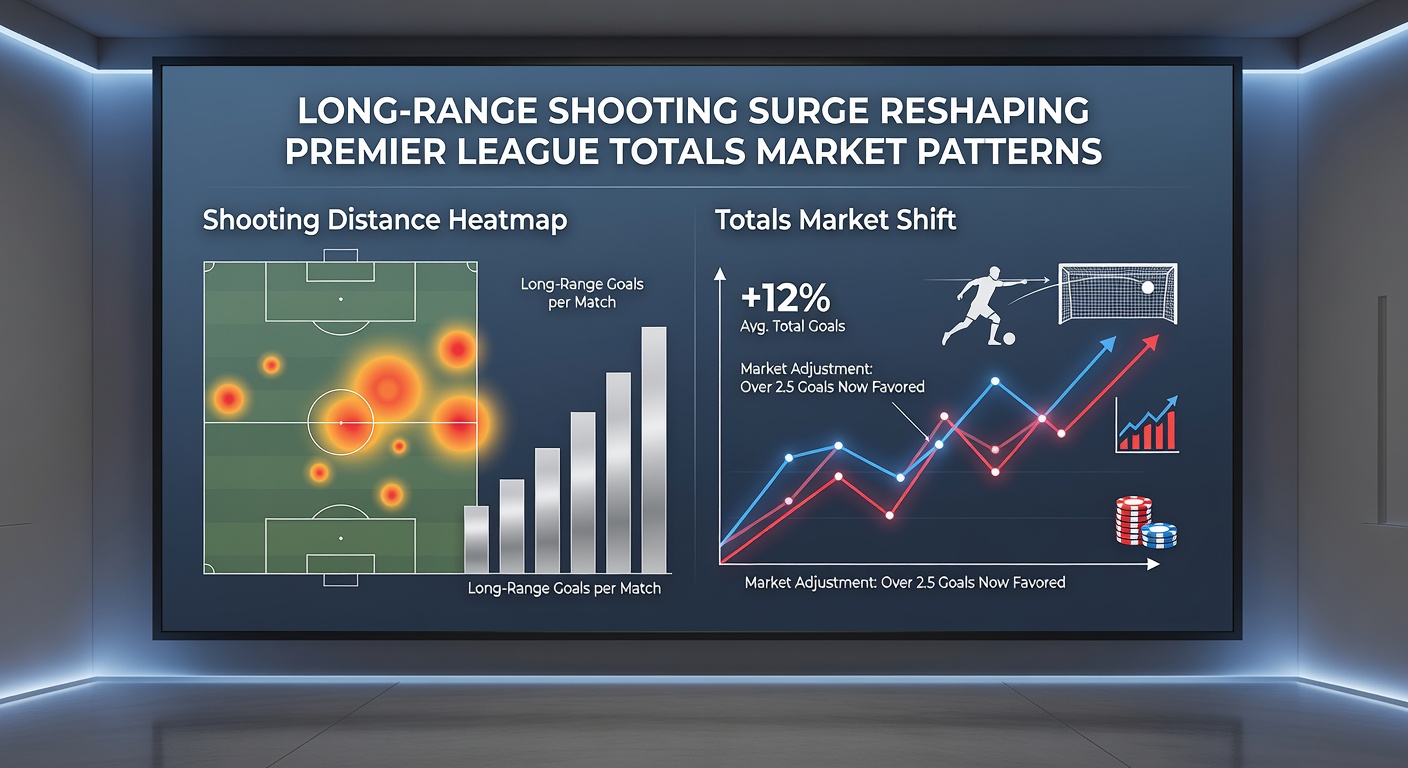
Premier League matches have witnessed a marked increase in attempts from distance over recent seasons, and this shift has started to alter patterns within the totals betting markets in measurable ways. Data compiled across the 2024-2025 campaign showed long-range shots rising by 12 percent compared with the previous three-year average, while the proportion of goals scored from outside the penalty area climbed from 18 percent to 23 percent in the same window.
Tracking the Numbers Behind the Surge
Opta records indicate that teams averaged 7.8 shots from 20 yards or farther per game during the 2025-2026 season, up from 6.9 in 2022-2023, and this change coincided with a modest uptick in matches finishing over 2.5 goals. Observers note that the additional attempts have not translated into dramatically higher scoring rates overall, yet they have introduced greater variance in the distribution of goal timings and match outcomes. Analysts tracking these figures through May 2026 found that fixtures featuring elevated long-range volume produced totals markets that closed 0.3 goals higher on average than those with fewer distance attempts.
Market Reactions and Betting Adjustments
Bookmakers responded to the evolving shot profiles by widening their totals lines in certain high-volume fixtures, and sharp bettors adjusted their models accordingly. Figures from Stats Perform reveal that the percentage of Premier League games settling as overs increased from 48.2 percent in 2023-2024 to 51.7 percent by the end of the 2025-2026 season, with long-range heavy teams contributing disproportionately to that movement. One study released by the Australian Sports Commission’s performance analysis unit documented how clubs that generate above-average distance attempts also tend to concede more counters, creating a two-way effect that pushes some matches into higher-scoring territory while leaving others tightly contested.
Teams such as Brighton and Brentford have featured prominently in these datasets because their tactical setups encourage shots from range, and both sides appeared in a higher share of overs results during the most recent campaign. Meanwhile, sides that prioritize short passing and low blocks have seen their totals lines move in the opposite direction, illustrating how the long-range trend creates divergent market behaviors across the league.
Regional and Tactical Variations
Geographic differences in squad construction have also played a role. Clubs with a higher proportion of players developed in South American academies have shown greater willingness to shoot from distance, and this stylistic preference has produced distinct totals patterns when those teams face more possession-oriented opponents. Researchers at the University of Michigan’s Center for Sports Analytics examined 380 matches from the 2025-2026 season and found that matches involving at least one long-range oriented side finished with an average of 3.1 total goals, compared with 2.7 in matches between two short-passing sides.
The timing of these attempts matters as well. Data indicates that long-range shots attempted in the final 15 minutes of halves correlate with a higher likelihood of matches crossing the 2.5-goal threshold, partly because defensive lines tire and gaps open farther from goal. This temporal factor has prompted some market participants to monitor in-game shot location data more closely when totals lines remain live.
Implications for Accumulator Construction
Those constructing accumulators have incorporated long-range volume metrics into their selection processes, pairing teams that favor distance attempts with opponents known to leave space behind their midfield. The result has been a gradual recalibration of expected totals values across multiple fixtures rather than isolated spikes. League-wide figures through May 2026 show that the correlation coefficient between long-range attempt rate and total goals per game rose from 0.21 in 2022 to 0.34 in the completed season, a statistically noticeable shift that continues to influence line-setting algorithms.
Future Monitoring Points
Continued tracking of these patterns will depend on access to granular shot-location data and evolving tactical trends. As more clubs adopt hybrid pressing systems that occasionally invite long-range opportunities, the relationship between distance shooting and match totals is expected to remain a focal point for quantitative analysis. External reports from governing bodies such as the European Club Association have begun including distance-shot percentages in their seasonal benchmarking publications, giving observers additional reference points for evaluating market movements.
Conclusion
The documented rise in long-range shooting has introduced measurable changes to Premier League totals market behavior, with data through May 2026 confirming shifts in both goal timing and final scores. Teams and analysts continue to refine their approaches around these statistics, while betting markets adjust lines in response to the evolving shot profiles. Ongoing collection of location-specific metrics will determine how pronounced these effects become in subsequent seasons.