Examining Correlations Between Set Piece Conversion Rates and Multi-Fold Betting Returns in Professional Football Leagues
Written by Eden Beck · Jul 26, 2026
Examining Correlations Between Set Piece Conversion Rates and Multi-Fold Betting Returns in Professional Football Leagues
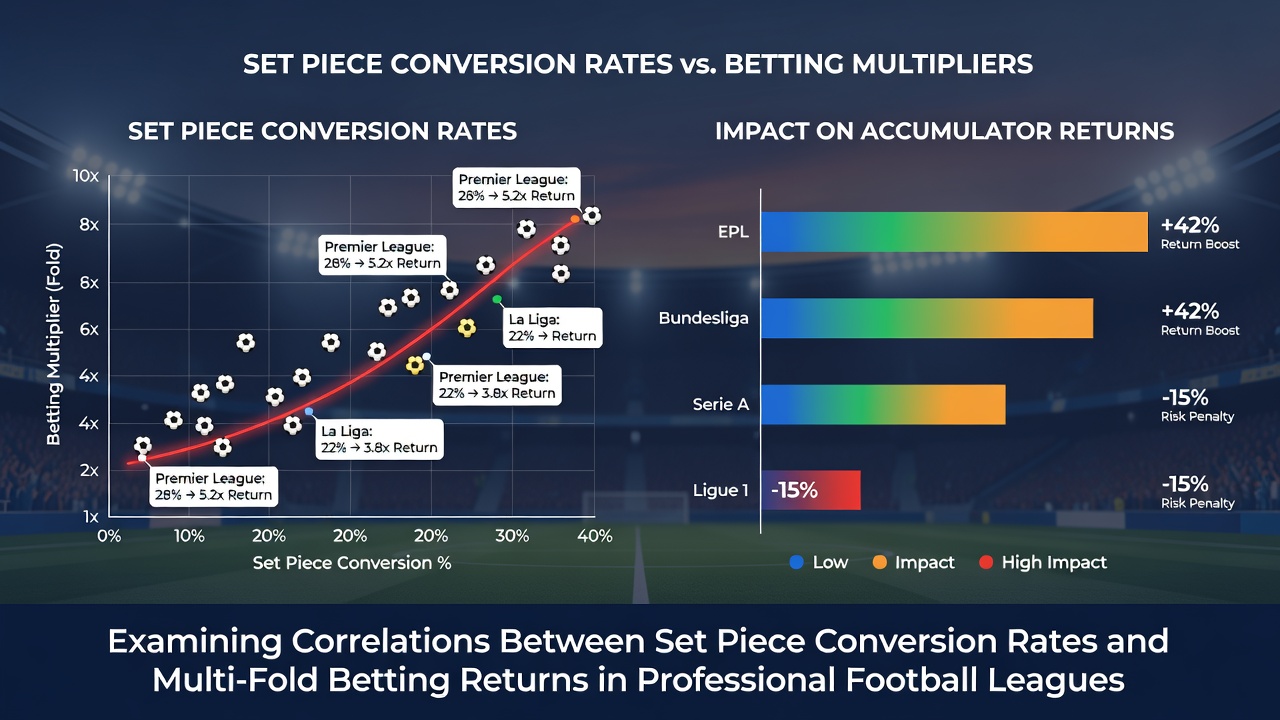
Professional football leagues continue to generate detailed performance metrics around set piece conversion rates, and these figures connect directly to patterns observed in multi-fold betting returns across major competitions. Analysts track how teams convert corners, free kicks, and throw-ins into goals because the data shows measurable links to accumulator outcomes in both domestic and European fixtures.
Set Piece Metrics Across Major Leagues
Leagues such as the English Premier League, La Liga, Bundesliga, and Serie A publish annual set piece statistics through official competition reports, and these records indicate that conversion rates typically range between 8 and 14 percent for top clubs during a full season. Data collected from the 2025/26 campaign reveals that sides finishing in the upper half of their respective tables posted higher conversion percentages on direct free kicks compared with mid-table and lower-placed teams, with the difference averaging around three percentage points.
Researchers at academic institutions have examined these trends by combining event data with betting market movements, and one study published by a Canadian research group highlighted that teams with above-average set piece efficiency produced stronger results in multi-leg accumulator selections focused on goal totals and match outcomes. The analysis covered more than 2,000 matches and found that incorporating set piece conversion as a variable improved predictive models by measurable margins.
Linking Conversion Rates to Accumulator Performance
Multi-fold betting returns depend on accurate assessment of multiple variables, and set piece data supplies one measurable factor that operators and analysts incorporate into pricing. Figures released by European football development bodies show that clubs maintaining consistent corner conversion rates above 12 percent recorded higher win percentages in home fixtures, which in turn influenced accumulator selections built around home wins and over-total goals.
What's interesting is how these patterns shift during different phases of the season, because July 2026 marks the start of pre-season preparations for the 2026/27 campaigns where squads test new set piece routines in friendly matches. Observers note that early data from these fixtures often provides initial signals for how teams might perform once competitive action resumes, particularly when combined with historical conversion rates from the prior campaign.

Statistical Patterns and Market Responses
Industry reports from organizations such as the Victorian Responsible Gambling Foundation have reviewed correlations between technical performance indicators and betting volumes, and their findings indicate that set piece efficiency contributes to variance in accumulator payout rates across European leagues. Teams that generate more set piece opportunities per 90 minutes tend to feature in selections with adjusted odds, especially when those opportunities occur in matches already priced for low goal totals.
Betting operators adjust lines when set piece conversion data deviates from seasonal averages, because evidence suggests that sudden increases in direct free kick success rates can shift expected goal values enough to affect multi-leg outcomes. One analysis from an Australian research center demonstrated that accumulators including matches with high set piece volume showed different return distributions compared with selections focused solely on open-play metrics.
Regional Variations in Data Application
European leagues display distinct set piece profiles, whereas South American competitions often feature different tactical emphases on long throw-ins and aerial duels. Data compiled across these regions reveals that the correlation strength between conversion rates and betting returns varies by competition style, with tighter margins appearing in leagues that emphasize possession-based approaches over direct set piece threats.
Those who study these markets observe that July 2026 transfer activity could alter squad compositions and therefore set piece execution quality, because incoming players frequently bring specialized delivery or finishing skills from previous clubs. Tracking these changes through official league databases allows analysts to update models that connect technical metrics to accumulator performance.
Conclusion
Correlations between set piece conversion rates and multi-fold betting returns rest on measurable performance data collected across professional leagues, and ongoing analysis continues to refine how these variables interact. As new seasons begin in 2026, updated statistics from competition organizers and independent research groups provide fresh inputs for evaluating patterns in accumulator markets without relying on subjective interpretation.