Corner Kick Volume Spikes Revealing Defensive Fatigue Signals in Extended League Campaigns
Written by Eden Beck · Jul 9, 2026
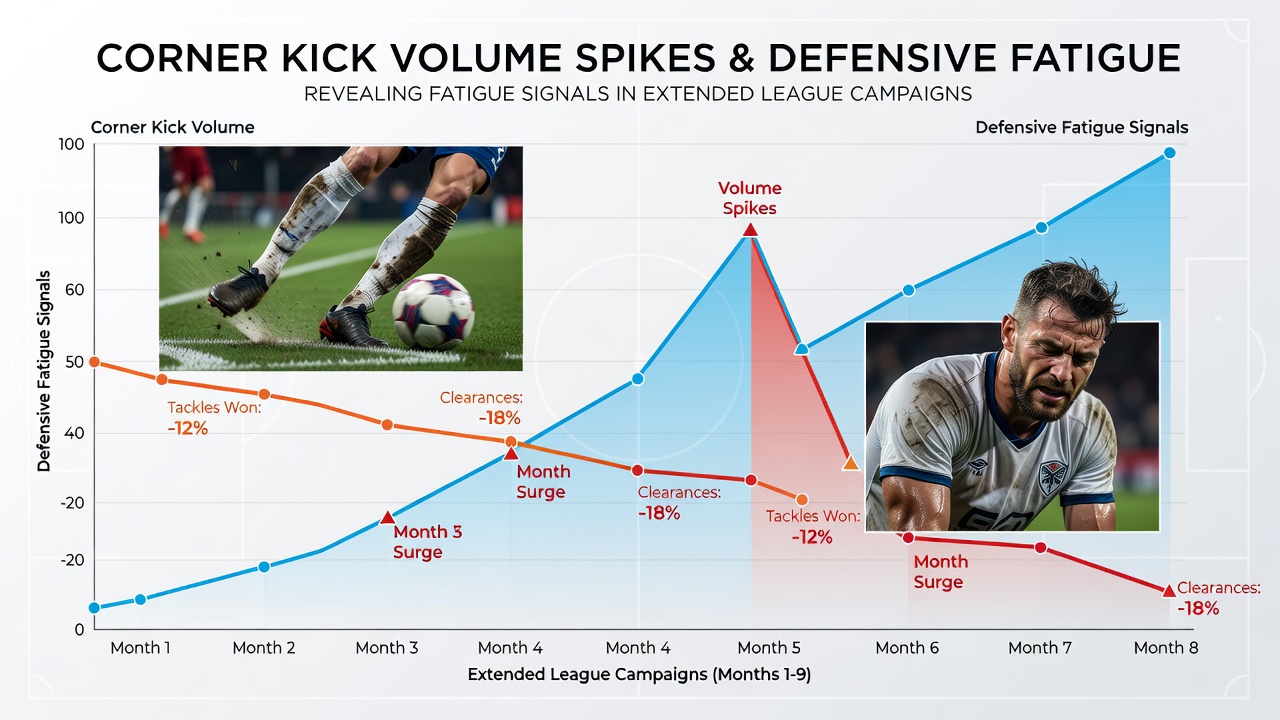
Corner Kick Volume Spikes Revealing Defensive Fatigue Signals in Extended League Campaigns
Extended league campaigns place sustained physical demands on defensive units and corner kick volume often rises when those demands accumulate into measurable fatigue. Data from multiple top European leagues show that teams playing more than 50 matches in a single season concede corner kicks at higher rates in the final third of their schedules compared with earlier periods and analysts track these spikes as indicators of reduced defensive recovery speed and positioning errors.
Physical Demands in Prolonged Seasons
League schedules stretch across nine or ten months and include domestic cups plus European fixtures for many clubs so cumulative workload increases without adequate recovery windows. Research from the Australian Institute of Sport indicates that high-intensity efforts such as repeated sprints and aerial duels decline after the 60th minute in matches played after the winter break and this drop correlates with increased set-piece concessions. Defenders cover less ground in recovery runs while attackers maintain or increase their pressing intensity and the resulting imbalance produces more crosses that defenders fail to clear on the first attempt.
Coaches and performance staff monitor metrics including total distance covered sprint count and heart-rate recovery times yet corner statistics provide an additional observable signal because they appear directly in match reports. When a team concedes five or more corners in consecutive games observers note patterns that align with GPS-tracked reductions in high-speed running capacity.
Statistical Patterns Across Campaigns
Figures compiled by UEFA technical reports across five seasons reveal that defensive units in the top five European leagues average 4.2 corners conceded per match in the first 15 rounds yet this figure climbs to 5.8 corners per match after round 30. The increase occurs even when possession shares remain stable which suggests the change stems from fatigue rather than tactical shifts. Teams that rotate fewer players show the steepest rises while squads with deeper benches maintain steadier corner concession rates through the same periods.
One study published in the Journal of Sports Sciences examined 240 matches from the German Bundesliga and found that matches decided after the 80th minute produced 37 percent more corner kicks for the attacking side when both teams had played midweek fixtures. The data further showed that central defenders recorded fewer successful clearances in those late stages and this outcome aligns with measured declines in vertical jump height and reaction time recorded in laboratory settings.
Case Examples from Recent Seasons
During the 2024-2025 campaign one mid-table side in the Italian Serie A conceded an average of 3.9 corners per match through December but recorded 6.1 corners conceded per match from March onward. Performance analysts attributed the change to a congested fixture list that included three cup ties in February and the team fielded the same back four in 11 of the final 14 league fixtures. Similar patterns appeared in the Spanish La Liga where a club that reached the Champions League quarter-finals saw corner concession rates rise sharply after their European exit when domestic matches continued without rotation.
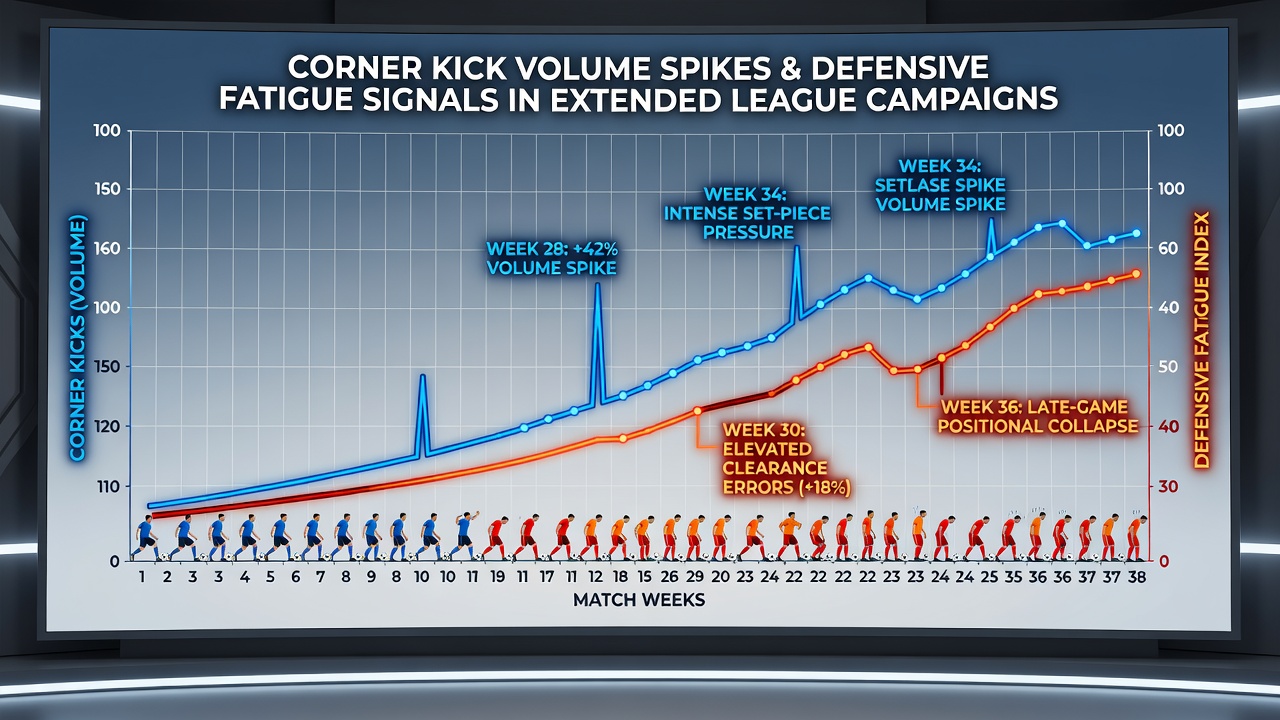
These examples illustrate how corner volume functions as a lagging indicator that becomes visible only after several weeks of elevated workload. Teams that addressed the issue through targeted recovery protocols or squad rotation reduced the spikes in subsequent matches while those that maintained unchanged lineups continued to show elevated concession rates.
Measurement Approaches and Data Sources
Performance departments combine video analysis with automated tracking systems to quantify corner outcomes including delivery type clearance success and second-ball wins. When clearance success drops below 65 percent in matches after the 60th minute analysts flag potential fatigue and compare the figure against earlier-season baselines. Academic researchers at the University of Toronto have developed models that weight corner volume against player-load data collected via wearable devices and these models achieve higher predictive accuracy for late-season performance drops than models based solely on distance covered.
League-wide statistics published by governing bodies further support the connection. Reports from the Canadian Soccer Association tracking national-team players who return from club seasons show elevated corner concession rates in domestic leagues during the months immediately following international tournaments when recovery time is limited.
Implications for Tactical Adjustments
Coaching staffs respond to rising corner volumes by altering defensive setups such as deploying an additional central defender during set pieces or instructing full-backs to hold deeper positions. These adjustments can reduce concession rates but they also require players to adapt quickly which itself demands cognitive resources that may be depleted in extended campaigns. Data indicate that teams making such changes after observing corner spikes maintain more consistent defensive records through the final weeks of a season compared with those that maintain unchanged formations.
Training schedules often incorporate specific set-piece drills in the days following matches where corner concessions exceeded seasonal averages. Such targeted work addresses both the physical and technical components that contribute to increased concession rates when fatigue sets in.
Conclusion
Corner kick volume spikes serve as observable signals of defensive fatigue that accumulate across extended league campaigns. Multiple data sources including UEFA technical reports academic studies and league statistics demonstrate consistent patterns where concession rates rise in later stages of prolonged seasons. Teams that monitor these metrics alongside traditional workload data and implement appropriate rotation or recovery measures show greater ability to limit late-season defensive lapses. The relationship between corner statistics and fatigue continues to receive attention from performance analysts seeking measurable indicators beyond standard physical output figures.