Busy Schedule Burdens: Premier League Teams' Responses to Fixture Clashes and Market Implications
Written by Gisela Powell · Aug 6, 2026
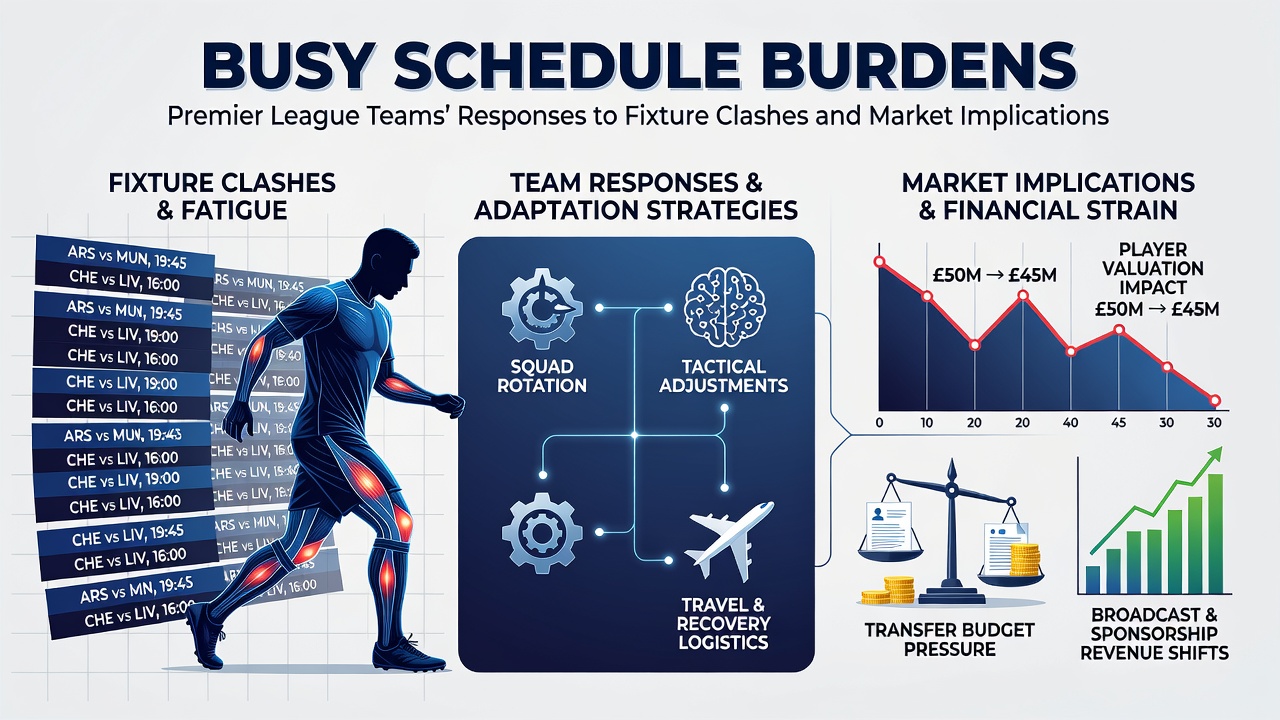
Busy Schedule Burdens: Premier League Teams' Responses to Fixture Clashes and Market Implications
Premier League clubs enter the 2026/27 campaign in August 2026 facing a calendar that stacks domestic matches against European commitments and international breaks, which creates repeated fixture clashes that force managers to adjust resources quickly. Data from recent seasons shows teams playing three matches in eight days experience measurable drops in key performance metrics such as distance covered and high-intensity sprints, according to figures compiled by league analysts. Observers note that clubs respond with targeted squad rotation, rest protocols, and tactical shifts that alter expected outcomes and prompt betting markets to recalibrate odds accordingly.
Fixture Congestion Patterns in the Premier League
Clashes arise when the domestic schedule collides with UEFA competitions and national team windows, a situation that intensified after the expansion of European group stages in prior years. Teams like those contesting midweek Champions League ties often face Saturday league fixtures that limit recovery time to under 72 hours, and league records indicate these compressed periods occur multiple times between August and December. Research published by UEFA on club competition calendars reveals that top sides average 50 to 60 matches across all fronts in a single season, which places direct pressure on player availability and training loads.
Team Responses Through Rotation and Recovery Strategies
Managers implement planned rotation systems that rest star players ahead of high-stakes fixtures while integrating academy graduates to maintain squad depth, and this approach produces variable results across different clubs. Data shows that sides rotating at least four players in congested periods maintain higher win rates than those relying on unchanged lineups, yet the same statistics highlight increased risk of defensive errors when less experienced defenders start. Clubs also adjust training intensity by reducing contact sessions and emphasizing recovery modalities such as cryotherapy and nutrition plans, measures that sports science reports link to lower injury rates during peak months.
One study from the University of Toronto's Faculty of Kinesiology examined workload data across multiple European leagues and found that structured rest periods of 96 hours between matches correlate with improved sprint recovery, which teams apply through selective benchings and tactical substitutions. University of Toronto research further indicates that psychological monitoring tools help identify fatigue before it affects match performance, allowing coaches to fine-tune lineups without public disclosure of underlying data.
Performance Impacts and Statistical Shifts
Fixture density influences goal tallies and clean sheet frequencies, with league-wide data indicating lower average goals per game in periods of three fixtures within seven days compared to standard weeks. Teams facing such schedules record fewer shots on target and commit more turnovers, patterns that betting markets incorporate when setting totals lines and handicap margins. Historical figures from the 2024/25 and 2025/26 seasons demonstrate that away sides in congested schedules concede more set-piece goals, prompting odds compilers to adjust prices accordingly.
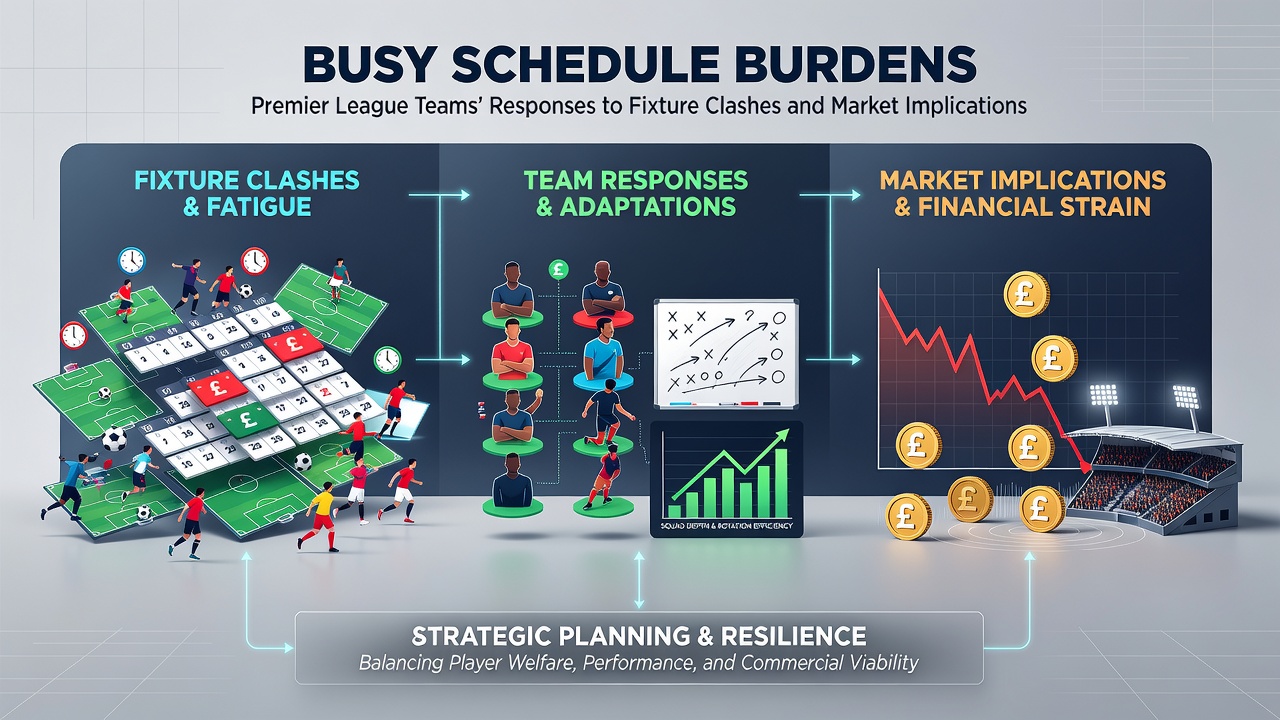
Yet not every club experiences uniform declines, because deeper squads with multiple international players can absorb the load better than those with thinner benches. Analysts tracking player tracking data observe that midfielders suffer the steepest drops in pass completion under fatigue, which alters possession-based styles and forces managers toward more direct approaches during busy spells.
Market Implications for Betting and Odds Adjustment
Betting markets respond to fixture congestion by widening or narrowing spreads based on published team sheets and historical performance under similar conditions, and operators update lines rapidly once rotation patterns become clear. Figures from industry reports show increased betting volume on under markets during congested periods because goal rates decline, while accumulator builders often target sides with strong home records despite limited preparation time. External regulatory data from Sport Australia on elite athlete scheduling underscores how recovery windows influence competitive balance, information that indirectly shapes market expectations when similar patterns emerge in European leagues.
Sport Australia reports on workload management provide context for how clubs balance multiple competitions without breaching player welfare guidelines, and these guidelines influence the timing of announcements that move odds. Markets also price in the likelihood of late changes, with live betting options expanding as in-game fatigue becomes visible through substitutions and reduced pressing intensity.
Conclusion
Premier League teams navigate fixture clashes through rotation, recovery protocols, and tactical adaptation, responses that generate measurable shifts in performance statistics and prompt corresponding adjustments across betting markets. As the 2026/27 season progresses from its August start, continued monitoring of workload data and team selections will determine how these dynamics evolve, with clubs that manage congestion most effectively maintaining competitive edges while markets reflect the resulting variances in real time.